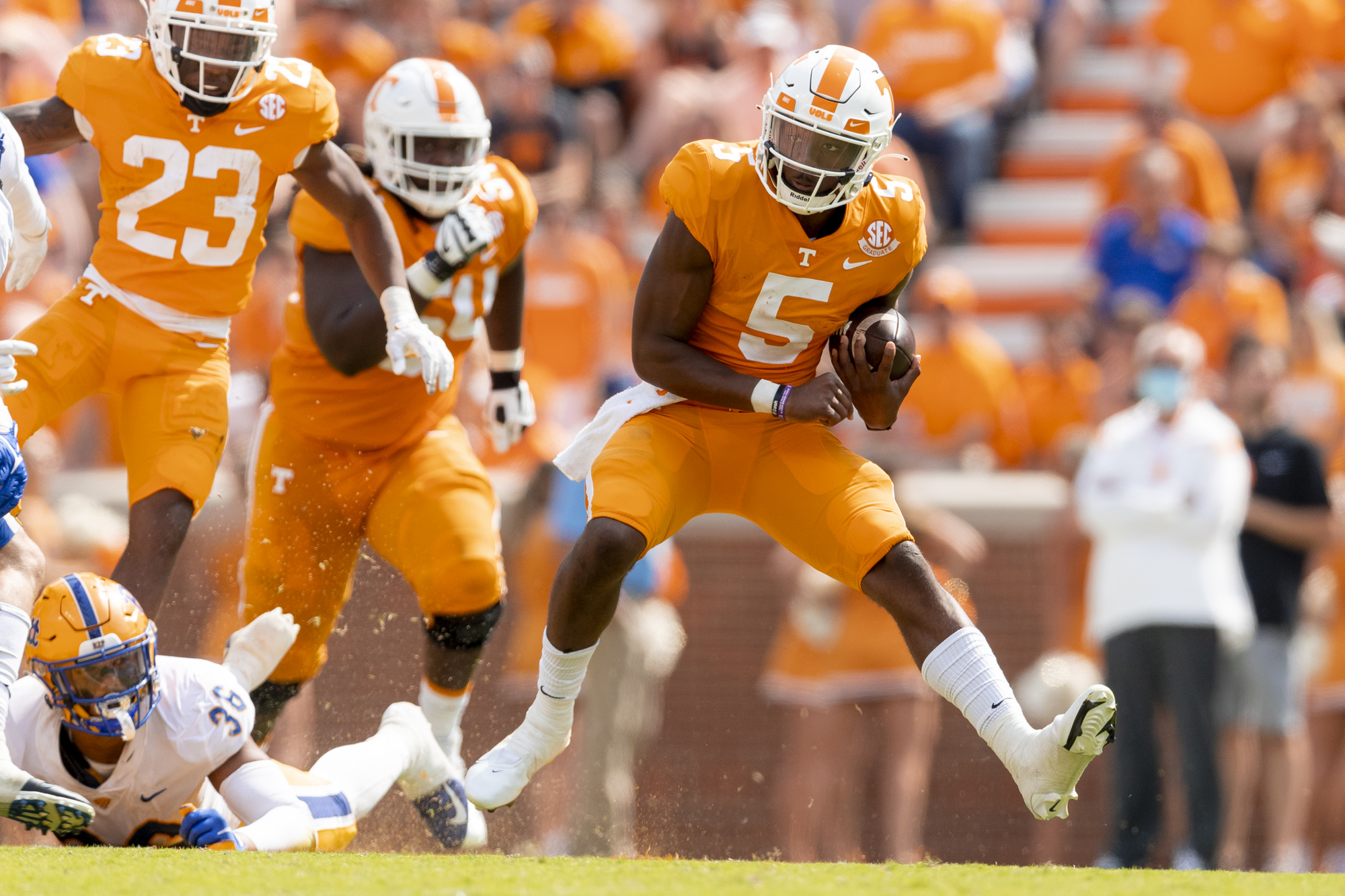
Tennessee at Kentucky Preview: Rivalry in Present Tense

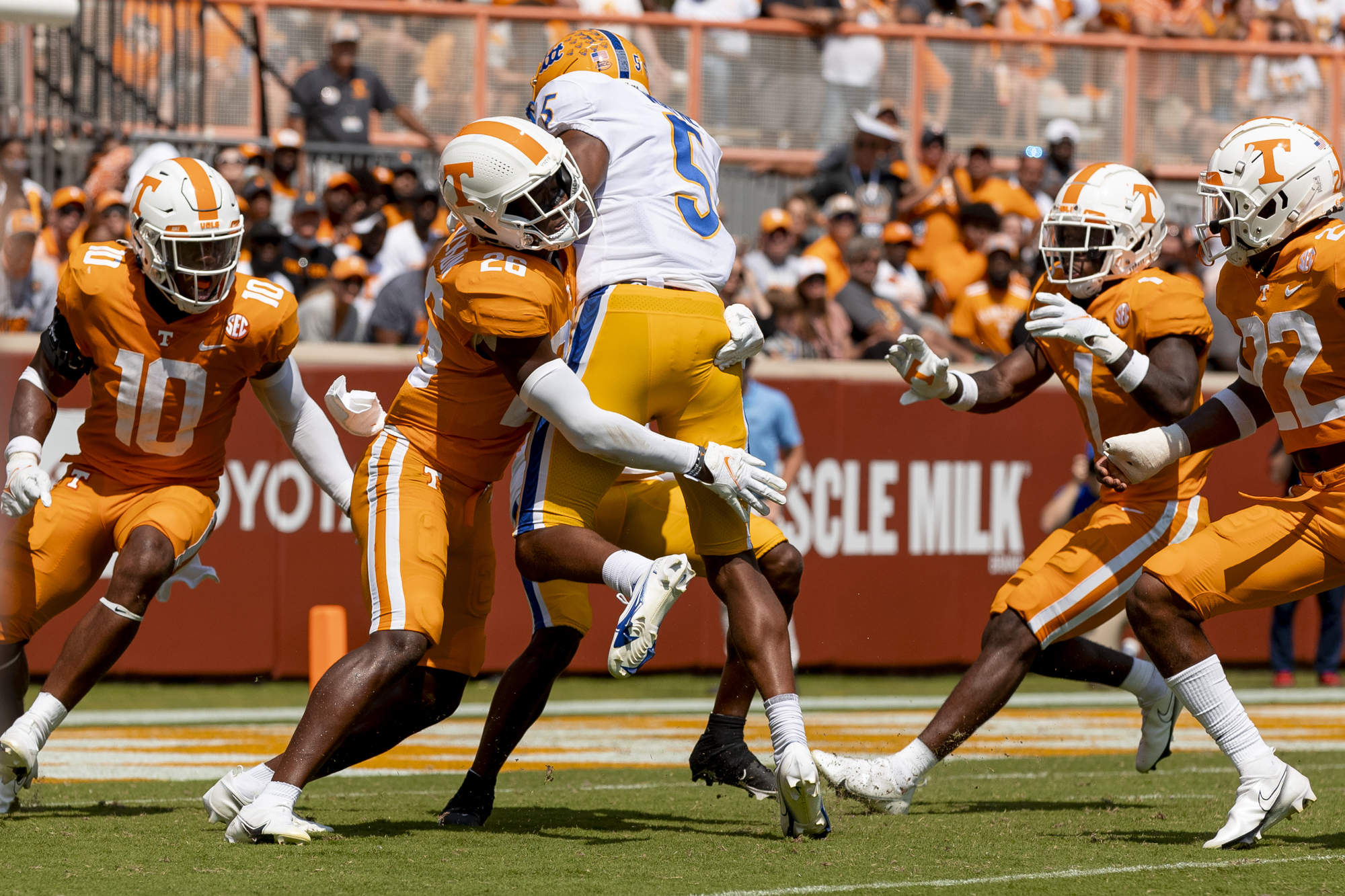
Opportunity knocks tomorrow night in Lexington, where the Vols will face #18 Kentucky in 40 degree glory. Tennessee started as a four-point underdog this week, but this morning I’m seeing them some places at -1. SP+ likes the Vols by four. And in expected win totals, our community gives Tennessee a 53.9% chance of victory, which is indeed a higher number than we saw going into toss-ups with Pittsburgh, Missouri, and Ole Miss.

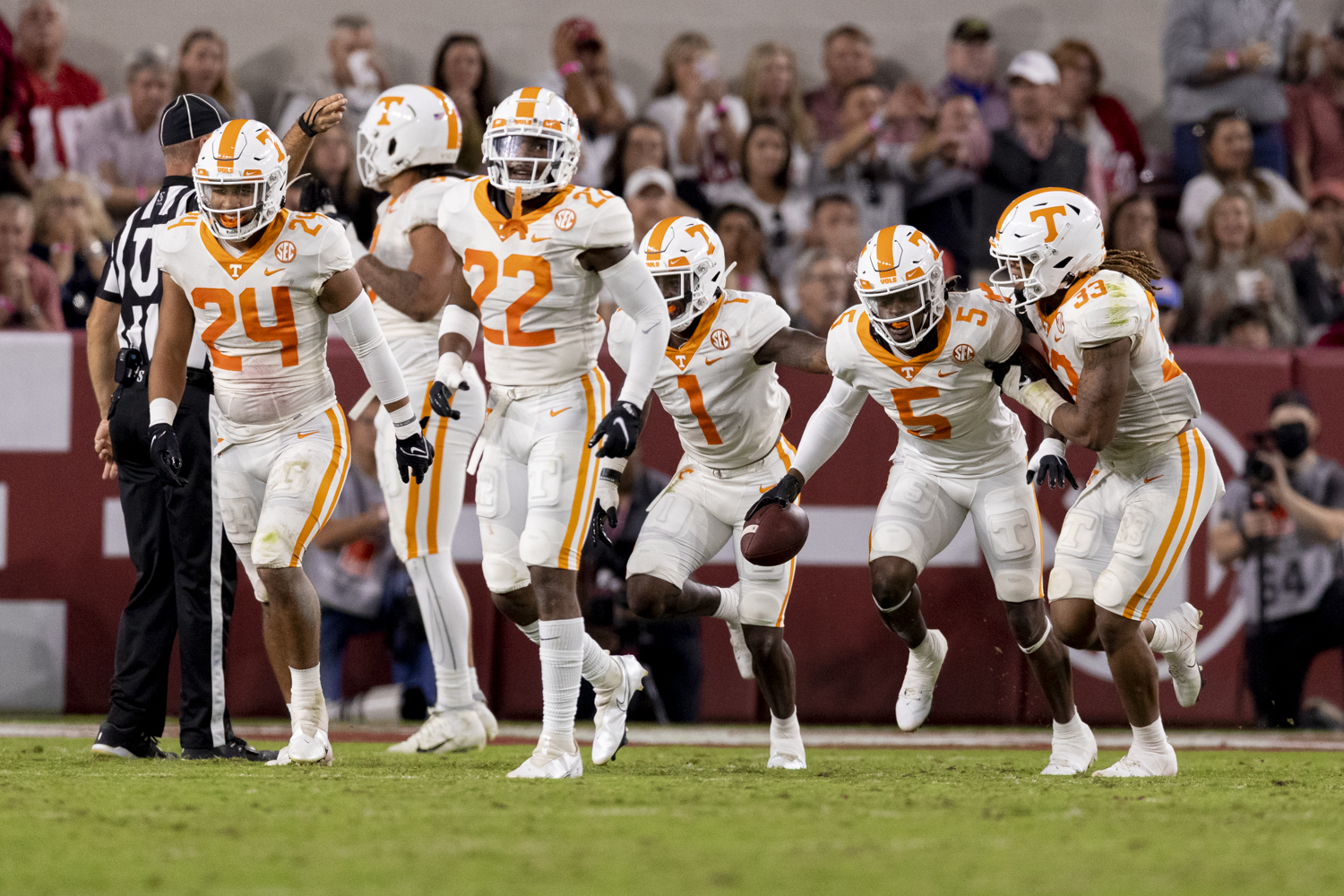
Josh Heupel’s team has played good football this season, really good compared to what we’ve seen before/thought we would again. In SP+ these Vols remain contemporaries of the 2009, 2012, and 2016 teams, and not the company of the last four years we thought they’d keep. They went deep into the night in Gainesville and Tuscaloosa. They had a chance to beat Pitt at -3 in turnovers. And they finished the Ole Miss game with a 74.1% win expectancy in SP+. It’s pointing in the right direction for the long haul.

This is the game to get to solidify the present.

Kill The Narrative

One thing the Kentucky game has done in the last ten years is drastically impact the narrative for Tennessee. We talked about this a lot during our lengthy period of coaching uncertainty last December, but when you look at Tennessee’s wilderness period as a whole, there are really only three games that could’ve single-handedly changed Tennessee’s fate in a significant way. There are many losses that weren’t close, many that were close but were followed by too many others. But I still think three games could’ve changed the story of Tennessee in the 2010s in a meaningful way. The fourth quarter of the 2007 SEC Championship Game, which would’ve kept Phillip Fulmer employed through 2008. Change one of any number of plays from the 2015 Florida game, and you’ve given Butch Jones an SEC East title in year three.

And the 2011 Kentucky loss, which might have kept more of the staff intact and prevented the defensive meltdown of 2012.

That 10-7 loss in Lexington, now celebrating its 10th anniversary, swung the narrative hard against Derek Dooley in ways the 2012 team/defense couldn’t recover from. It was at the time a blip on the radar: Tennessee won the next five in the series in the transition from Dooley to Butch and Joker Phillips to Mark Stoops. When the Cats won again in 2017 (despite the Vols being +4 in turnovers, because we attempted six field goals), it solidified the narrative, effectively ending the Butch Jones era. Take nothing away from how Kentucky fans felt about it, but for us it was almost a relief.

And then, last year.

There was more losing behind and before Jeremy Pruitt; it wasn’t one of those games that if you change a couple plays or the entire outcome, he’s still the coach here. But considering where we were at halftime the week before, and where we left that day in Knoxville? It’s one of the most dramatic and revealing swings we’ve experienced.

October 17, 2020 was originally Tennessee’s bye week in pre-covid world. So I, like many, was getting ready for a wedding. The Vols had a halftime lead on Georgia seven days earlier before turnovers buried them. “Can’t beat Georgia when you do that,” we thought, “but we’re still a good team.” Still won eight in a row before Athens. Kentucky was 1-2 with losses to Auburn and Ole Miss, plus a win over Mississippi State. And it was Tennessee who came into this one ranked 18th.

It happened slowly, at least as I remember listening to it on the radio, and then it happened very fast. There’s a freedom that comes from changing coaches and playing well that allows us to look back on this game this week and see that’s true. Kentucky went three-and-out, and Tennessee drove to the UK 30. But Jarrett Guarantano was sacked, and the Vols punted from their own 37.

Then Kentucky fumbled at their own 45 yard line, but Tennessee gave it right back at the 26. Kentucky punted again, and we went to the second quarter scoreless.

The first pick six came in Tennessee territory, raced back 41 yards for a 7-0 Kentucky lead. The Vols went backwards on the ensuing first down, but then ripped off gains of 25, 10, 9, and 8. First-and-10 at the UK 28, no problem.

And then the second pick six, 85 yards for a 14-0 Kentucky lead. Then J.T. Shrout, who threw an interception two plays later, leading to 17-0.

Tennessee had 4th-and-1 at their own 34 with five minutes to play in the half, went for it, and converted. Then Eric Gray and Ty Chandler carried the ball ten straight times for a touchdown. 17-7 at the break, with Tennessee’s defense keeping everything alive.

To open the third quarter, the Vols again had 4th-and-1 at their own 30. This time, Pruitt elected to punt. And this time, Kentucky pounced: 76 yards in 11 plays, facing nothing more than 3rd-and-1. 24-7 Cats midway through the third quarter. In response, the Vols got one first down before Guarantano was sacked, effectively ending the drive. Kentucky added three more. An unsportsmanlike conduct penalty ended the next drive, and Kentucky went 54 yards without facing anything more than 3rd-and-2. It was over with 11 minutes still on the clock. Lots of things felt over.

In Vegas, it’s the worst Tennessee has performed in the post-Fulmer era: favored by 6.5, lost by 27. Any remaining signs of life against Arkansas and Auburn died out in the same game. And the investigation sealed the deal on the Jeremy Pruitt era.

New Life From the Old

Losing to Kentucky in Knoxville for the first time since 1984 was, in many ways, the last remaining seal on the old days. There is no more, “Tennessee always beats _______________.” Removed from the heat of the moment, I think that can actually be a good thing. Too many years, too many tries, etc. – best to focus on the present, where Heupel and company are doing a great job so far.

And that’s what makes tomorrow night such a great opportunity: the chance to solidify that narrative for 2021 by beating a ranked team. The Vols would go to 5-4, with only a shot at #1 and assumed wins over South Alabama and Vanderbilt remaining. Maybe this kind of opportunity will present itself in a bowl game, maybe not. But it’s here today, and the Vols should feel like they have every opportunity to get it.

The team’s performance this year has left little doubt on whether moving on from Pruitt and company was a good thing. The investigation that ended his tenure is now ended itself, and there is no bowl ban coming from Tennessee’s side. The Vols are playing well, in hopes that recruiting will follow. And in this sport, everything follows winning, and Heupel has a chance to get his biggest one tomorrow night.

Credit Kentucky, as well, for the move from, “Losing to these guys costs everything,” to, “Beating these guys can solidify the present.” Advanced stats may not love them, but if they beat us? All that stands between them and a 10-2 season is Vanderbilt, New Mexico State, and the rivalry finish with Louisville. Even after last week, that may be all that stands between them and the Citrus Bowl, at worst. That would join the 2018 team as the program’s best bowl appearance since 1951.

Under Stoops, Kentucky is free from their past. And this, so far, has felt like a good time for the Vols to make a clean break from theirs, good and bad. The future remains too soon to tell overall in Knoxville, and Stoops’ good work may make this a more anxious ride on the coaching carousel in Lexington. But no matter what, both teams have done the good work this season of making this a really big game. For both teams. In the present.

Again, credit Heupel and this team for even getting in games like this in year one.

Now’s the time to win one.

Go Vols.
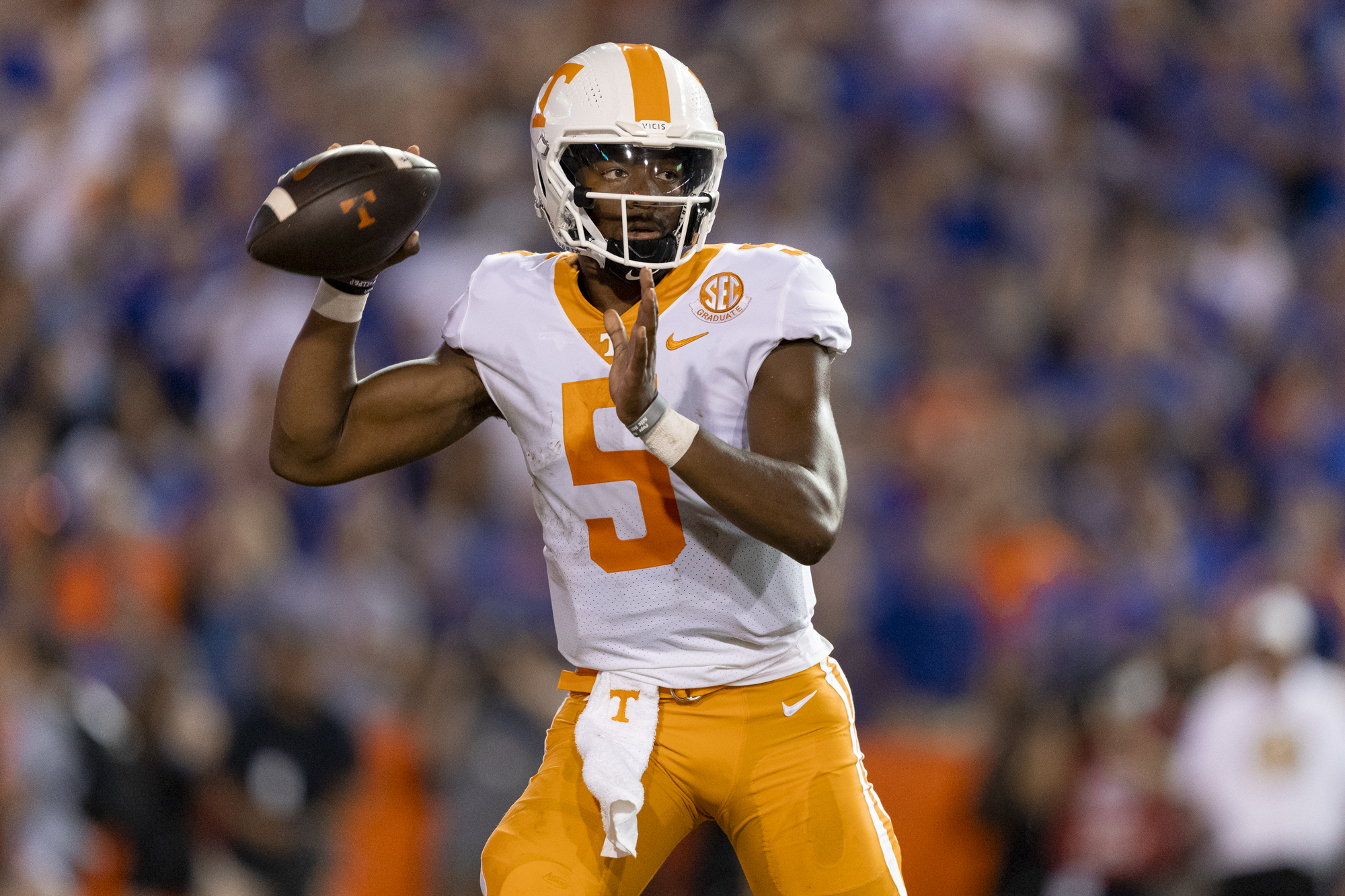
Expected Win Total Machine – Kentucky Week

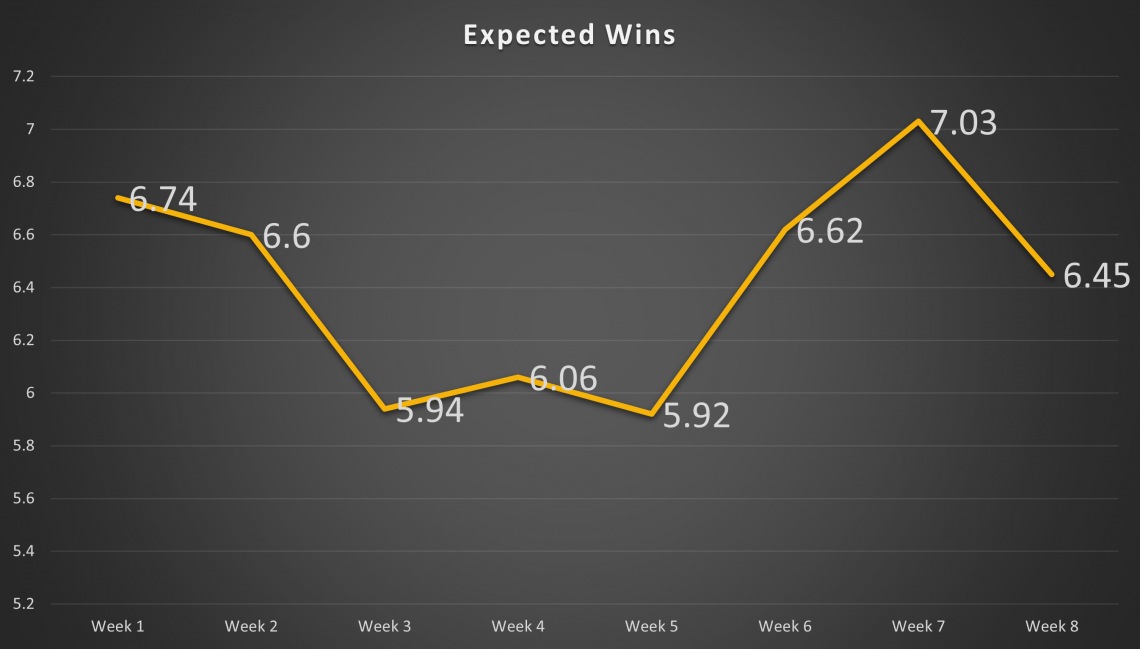
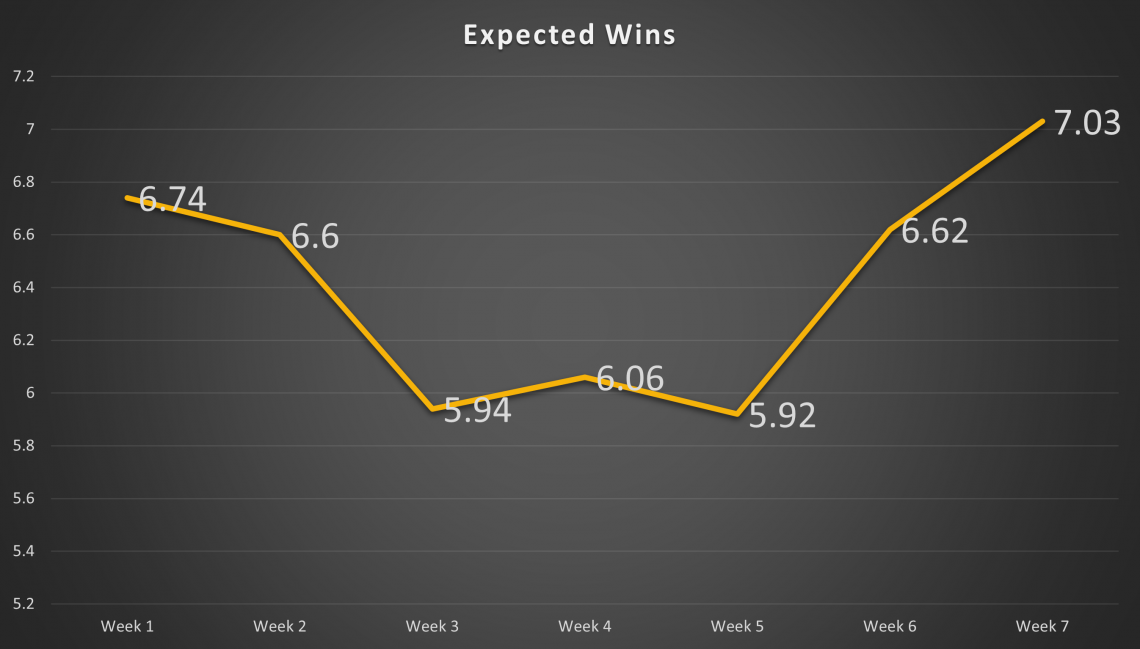
Last week, our community projected the Vols to finish with 6.54 wins, just a hair down from the preseason total of 6.74 in preseason. That number was actually up from the week before (6.45), showing increased confidence in the Vols despite the loss at Alabama.

Considering our November schedule, the real difference between six and seven projected wins is what you think Tennessee will do on Saturday night in Lexington. Last week, our community gave Tennessee a 51.5% chance of victory in the Bluegrass, numbers similar to what we’ve seen against Ole Miss (47.2%), Missouri (52%), and Pittsburgh (49.2%). We thought those would be four toss-up-ish games in preseason, and they all felt about that way heading into kickoff.

But now, heading into this kickoff, Kentucky is fresh off a faceplant in Starkville.

So we’re running the machine again this week, to see how much more confident you’re feeling against the Wildcats. The Georgia number may change a bit as well after they stomped Florida, but we’ll worry about that next week.

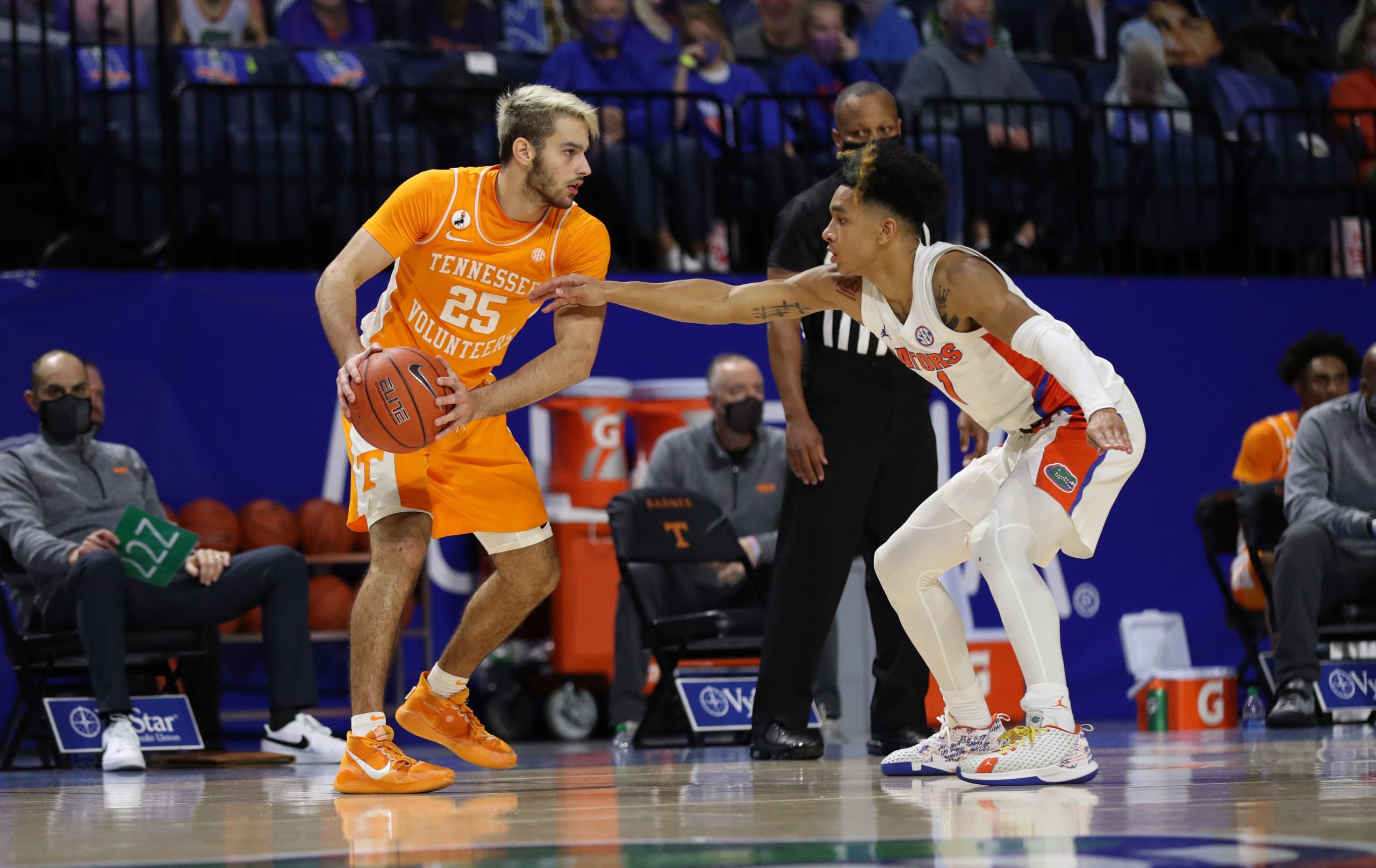
Tennessee Basketball Preview: KenPom Tiers & Two Questions

A shout out, first of all, to Josh Heupel and the football team. There was more than one scenario here where we would’ve wanted to start the basketball conversation much sooner. Instead, it’s really a perfect setup: a first glimpse is available while the football team is off tomorrow, if you want it, via an exhibition with Lenoir-Rhyne (3:00 PM, SEC Network+). The real action doesn’t begin until Tuesday, November 9 vs UT-Martin. And the real action waits until the football Vols are through with Kentucky and Georgia, then is there for you on Saturday, November 20 when Tennessee faces Villanova in the Hall of Fame Tip-Off Tournament. (That game is at 1:00 PM, so you want that South Alabama kickoff to find its way to like 4:00).

Same as football with SP+, we find one of the best ways to put an upcoming season in context is with Ken Pomerory’s data. It’s no guarantee, and sometimes that’s a good thing. Preseason SP+ projections this season had us (rightfully) asking if Heupel’s first team could just be better than three of the last five seasons in the program’s basement. Instead, right now they’re playing at a level similar to 2009, 2012, and 2016, some of our most competitive football of the last 14 years.

But credit KenPom for nailing last year’s team, which was no small feat with Keon Johnson and Jaden Springer new to the mix. In preseason, they rated an even 20.00 (points better than the average team on a neutral floor in 100 possessions). After Baylor cut down the nets, their final rating was…19.95.

That put them in what we labeled the Dangerous Tier among recent Tennessee teams: they can beat anybody, but they’re not consistent enough to earn your full trust. That group is Tier C among UT’s last two decades.

Where does the 2022 team project at the start of the season?

  • Tier A – The Current Peak: 2019 (26.24 KenPom)
  • Tier B – The Fully Capable: 2014 (23.69), 2018 (22.27), 2008 (22.17), 2022 (21.60 preseason)
  • Tier C – The Dangerous: 2021 (19.95), 2006 (19.44), 2010 (18.50), 2007 (18.29)
  • Tier D – The Unnecessary Defense of Bruce Pearl: 2009 (16.48)
  • Tier E – The Bubble (but probably the NIT)
  • Tier F – That’s okay, we used to be a football school (Buzz Peterson’s last two years, Donnie Tyndall, Rick Barnes’ first year)

It might feel a little strange to put them in the tier above the group we labeled as less consistent. Cuonzo Martin’s final team is in Tier B, and there are hundreds of thousands of words spilled in the archives at Rocky Top Talk on all that. But at the end of the season, that group was playing at an extremely high level, and was a bang-bang call away from beating a #2 seed to advance to the Elite Eight.

The challenge with consistency will again be so many new faces on this team. Keon Johnson and Jaden Springer are out (Keon is yet to appear for the Clippers; Springer got two minutes of mop up duty in one game for the Sixers). So too is Yves Pons, yet to appear for the Grizzlies. I think his absence will be most noticeable, simply because there’s no one that can erase what he erased for Tennessee’s defense. The Vols also said farewell to Davonte Gaines and Drew Pember via the transfer portal; Gaines is with Kim English at George Mason, Pember at UNC Asheville.

Meanwhile, in is – gasp! – a true point guard, five-star Kennedy Chandler. He’s the highest-rated recruit of an impressive Rick Barnes era, trailing only Tobias Harris and Scotty Hopson on 247’s all-time list. In the CBS list of the 100 best players for the 2022 season, he came in 20th – not in the SEC or among freshmen, but overall.

In is five-star Brandon Huntley-Hatfield, a 6’9″ forward who we’ll be watching closely to see how the Vols utilize him in their lineups. In is Auburn transfer Justin Powell, who hit 44.3% from the arc as a freshman last year before suffering a concussion on January 2 that cost him the rest of the season.

And in is the rest of this freshman class, that by itself would’ve been an impressive haul for Tennessee at any point before the last three years: Jonas Aidoo, Jahmai Mashack, Quentin Diboundje, Zakai Zeigler, and Handje Tamba. It all added up to the #4 recruiting class in the nation.

What will it add up to for this Tennessee team?

We know Josiah Jordan-James, Santiago Vescovi, and Victor Bailey. And we really know John Fulkerson (who will miss tomorrow with a broken thumb but should be available for the opener). If he can return to his 2020 All-SEC form, he’ll be in for quite the finale.

There’s also much we haven’t learned yet about Uros Plavsic, and especially Olivier Nkamhoua, who’s getting a lot of preseason chatter. After that group of four upperclassmen (and, we assume, Kennedy Chandler), minutes are available, and valuable. The always excellent Will Warren has an in-depth preview with lineup projections.

The real answers will have to wait until we see all this newness for our own eyes. But the two biggest questions, as they relate to the difference between this year and last year, are this:

What does the defense look like without Yves Pons (or Kyle Alexander) to take away so many shots? Maybe BHH becomes that guy in a hurry, or Nkamhoua has turned into him. But the Vols have been in the Top 15 nationally in shot-blocking percentage the last three seasons. Pons was the individual player I watched the most on defense out of anyone who’s ever played here. Nothing was totally safe. It’s a huge part of what made this team such a force defensively on so many nights last year. With Barnes, you expect defense to lead the way. So what does that leading look like this season?

And who knocks down threes? The last two seasons, the answer has really been no one reliably: 31.3% from the arc in 2020, 33.1% last season. Jaden Springer shot 43.5% but only took 1.84 per game. Josiah was a woeful 30.8%. Yves Pons was 27.4%. The Vols brought in Powell, but keep an eye on Vescovi as well, especially when he’s on the floor with Chandler. He quietly hit 37.3% last season. If Tennessee can get answers here the way they did in 2018 and 2019 – not even spectacular, just solid – you expect a Barnes defense to more than do its job on the other end.

Last year I think we were more excited about the individual talents coming in than anything else; fair enough, we’re still inexperienced at having multiple five stars and what it does and doesn’t mean in March. This year we’ve got two more five stars, one of them rated even higher…but the conversation on Chandler feels less about his individual talent, and more about what it might do in service to this team. There are certainly questions of rotations and chemistry with so many new pieces. But there’s also an assumption that things will just be easier this time around than last year due to the virus.

The Vols are 13th overall (first in the SEC) in KenPom, 18th in the AP poll, and a five seed in ESPN’s bracketology. But there’s a quiet hope that this group might be able to play at a higher level with greater consistency than last year’s squad. We’ll need to see the defense against live fire to learn what they’ll do without Pons. But if the offense can just find a shooter or two – and Chandler should help create that – they’ll have an opportunity to put themselves in position to advance when it matters most.

Credit Heupel and the football team for having us hold off on this conversation until now. And credit Barnes and the basketball team for allowing us to believe big things are possible every year now.

Go Vols.

Third Downs: Quality in Quantity

Whether trying to keep up with an elite rival or finding themselves in a toss-up, the margins are thin for this Tennessee team. We’re accustomed to saying that in a coach’s first year, when it’s often led to blowout losses. But these Vols went deep into the night in Gainesville and Tuscaloosa. And they were the proverbial one play away against currently-ranked #10 Ole Miss and #17 Pittsburgh.

It’s never really one play, especially so when the Vols are playing at such a fast pace. Tennessee’s offense is eighth nationally in total snaps, its defense 127th in snaps allowed. I’ll keep saying it this year, and who knows how long after that: we’re still getting used to watching football this way. Not only did individual plays stand out more in the past because there were fewer of them, you also had so much more time between plays to internalize the last one.

This continues to feel much more like basketball: important stuff happens all night, but you’re going to pay much more attention to what happens at the end. For example, the most important play in the Tennessee/Ole Miss game, as it related to its impact on the outcome, was probably the fumbled punt. But because it happened just four minutes into a night that stretched into morning, we talked about it far less than many of the evening’s additional festivities.

Thin margins at a fast pace means you’ll have more opportunities for moments that can swing the game. It’s never just one play, but there are now more individual plays that can make a big difference. Case in point: what Tennessee is doing on third down on both sides of the ball.

On offense, the Vols are 15th nationally in third down conversions (vs FBS) at 47.96%. This is in spite of a 2-for-13 performance in Tuscaloosa. Last year the Vols were 118th in this department, converting at 30.23%. The last time Tennessee was north of 45% in this category: 2015, when the offense rebounded from a 6-of-18 performance against Oklahoma to hit at least 40% in every other FBS game. We tend not to think of the 2015 offense as one of the best we’ve seen recently because the 2016 version was better. But converting third downs covers a multitude of sins: witness the ’16 Vols going 5-of-14 at South Carolina.

A point I’m sure we’ll return to against Georgia: Tennessee’s worst two performances here are, no surprise, at Florida and at Alabama. In Gainesville the Vols came up empty on a 3rd-and-4 and a 3rd-and-6 in the first half. And, of course, had the back-breaking drop on 4th-and-5 at the Florida 30 in the third quarter.

In Tuscaloosa, there were actually far more opportunities lost: 3rd-and-1 on the opening drive, 3rd-and-1 after the fumble that led to consecutive false starts, 3rd-and-1 on the next drive in a tie game, 3rd-and-2 on the next drive. Then, following the blocked punt, the Vols had 3rd-and-5 at the Bama 10. And, of course, 4th-and-1 at their own 47 down 24-17 with four minutes to play in the fourth, when they elected not to go for it.

I don’t know if any improvements in third-and-short should be expected against Georgia, other than learning not to run into the teeth of the defense and hope for the best. But the Vols did a good job putting themselves in position to succeed.

At its peak, this offense does what it did to Missouri, and never even faces third down until they’re up 28-0. The more realistic picture is what it did to South Carolina: 12-of-17 on third down, in part because they did such a good job putting themselves in manageable situations. Can we see something like that at Kentucky, currently 51st in third down defense vs FBS foes?

Of course, speaking of defense: Tennessee is 122nd in this department, giving up 48.76% on third down vs FBS foes. Alabama was a brutal 15-of-20.

Again, pace: in regulation vs power five, the only Tennessee games of the post-Fulmer era to even feature 20 third down attempts are:

  • 2021 Alabama (15-of-20)
  • 2021 Ole Miss (11-of-21)
  • 2021 Pittsburgh (8-of-20)
  • 2016 Missouri (11-of-20 vs Heupel)
  • 2014 Florida (7-of-20; 16 total punts in this game)
  • 2014 Ole Miss (7-of-20; 18 total punts in this game)

So yeah, don’t let Bama convert 75% on third down. But the only way you even approach this number of conversions is to play at this pace, or be so poor offensively everybody gets more turns.

Consider though: the Vol defense made a stop on third down 10 times against the Rebels, and a dozen times against Pittsburgh. These are the kind of numbers we’ll need to see at Kentucky, currently 27th nationally in third down conversions vs FBS. That figure includes abysmal performances against Florida (1-of-9) and LSU (2-of-7), even in victory. They were much more manageable against Georgia with nine conversions, but on 19 attempts.

The Vols are close enough to be interesting against the most talented teams on their schedule, and a genuine toss-up with the kind of opponent Kentucky appears to be. Whether it’s beating the Cats or staying close with Georgia, third downs will be of great importance on both sides of the ball. The bye week is great, but protecting a defense that’s simply on the field far too often will still be an issue the next two weeks. The margins are thin, but the opportunities are there. It feels strange to say with so many more plays per game, but I feel like third downs have never meant more.

Expected Win Total Machine – Bye Week

The final third of the season features the Vols against #1, chances to get wins five and six, and a trip to #12 Kentucky that should make the difference between six and seven. The questions this week then:

  • Do you give the Vols a better chance against Georgia than you did against Alabama?
  • How are we feeling about Kentucky?

Tennessee at Alabama Preview: Race For Your Life

One of the plays I remember most from the 2016 win over Florida happened early, not late. That game still stands as the “best win in Neyland since ________”, with plenty to celebrate. But anxiety was the keyword on the front end after the Vols struggled with Appalachian State, then again with Ohio in a 28-19 win the week before. The offensive line was banged up and hadn’t played well, making Josh Dobbs vulnerable and a downfield passing game sporadic. Florida’s #BDN had 16 sacks in the first three games, with a noisy secondary making every pass play seem like an adventure.

With the Vols down 7-0 but driving, Florida brought pressure. Tennessee picked it up initially, but it became clear Dobbs was in trouble. And a woman sitting on the row in front of us – feeling, like all of us, some of that same pressure – just let out a blood-curdling scream right before Dobbs was sacked.

That Saturday, despite all the pressure, turned out alright. But there have been others in the last 13+ years where a banged up offensive line made you genuinely fear for the safety of your quarterback. It happened not once, but twice to Justin Worley: knocked out of the Alabama game in 2013, knocked out of the Ole Miss game in 2014 on one of their seven sacks.

Hendon Hooker is day-to-day like the rest of us. The assumption is Tennessee’s offense will be something more like questionable or doubtful if he doesn’t play. Meanwhile, the Vol offensive line may be without at least one of the Brothers Mays. And yeah, it’s Bama.

It’s interesting to see and hear Josh Heupel this week, juxtaposed with some of the local media and Tennessee fans. We’ve lost to Alabama for 14 years now, with only two of them a one-possession game. The line opened at +29, but I’m seeing it at +24.5 some places this morning. In our last two trips to Tuscaloosa, the Vols were +34.5 (2019) and +36.5 (2017).

Progress against these guys is more measured. For instance, if the Vols kept it to just three possessions? That would be just the fourth time in the last dozen tries.

Fans know this drill: despite the significant rise in the quality of football the Vols are playing this year, we give UT only a 6.7% chance of victory Saturday night in our expected win total machine. For the season, our expected win totals hover in that tempting space between six and seven wins:

So it makes sense that much of the fan and local media conversation this week has been some form of, “Rest your guys, take the bye week, get healthy and take your shot at #15 Kentucky.”

It’s refreshing to hear Heupel talk about this rivalry as if he hasn’t had the life beaten out of him yet. So, if Hooker does play, how can we keep this thing out of admirable, but mistaken territory?

Because, of course, the one thing Tennessee hasn’t done well, in all their vast improvement? Protect the quarterback.

The Vols are surrendering 3.57 sacks per game, 120th nationally. It cost them late against Ole Miss, and has cost them often this season. It’s easy to assume this too is a stat inflated by how fast the Vols play, and how many snaps we get per game. But Tennessee is still running the ball 63.9% of the time. Against FBS competition via Team Rankings, the Vols run it 61.6% of the time, the 18th highest percentage nationally.

And against FBS competition, the Vols give up a sack on 12.64% of their dropbacks. That’s 124th nationally. By contrast, that number was 9.24% last season. A 10.53% sack percentage in 2017 is the worst number on record for the Vols with data going back through 2002.

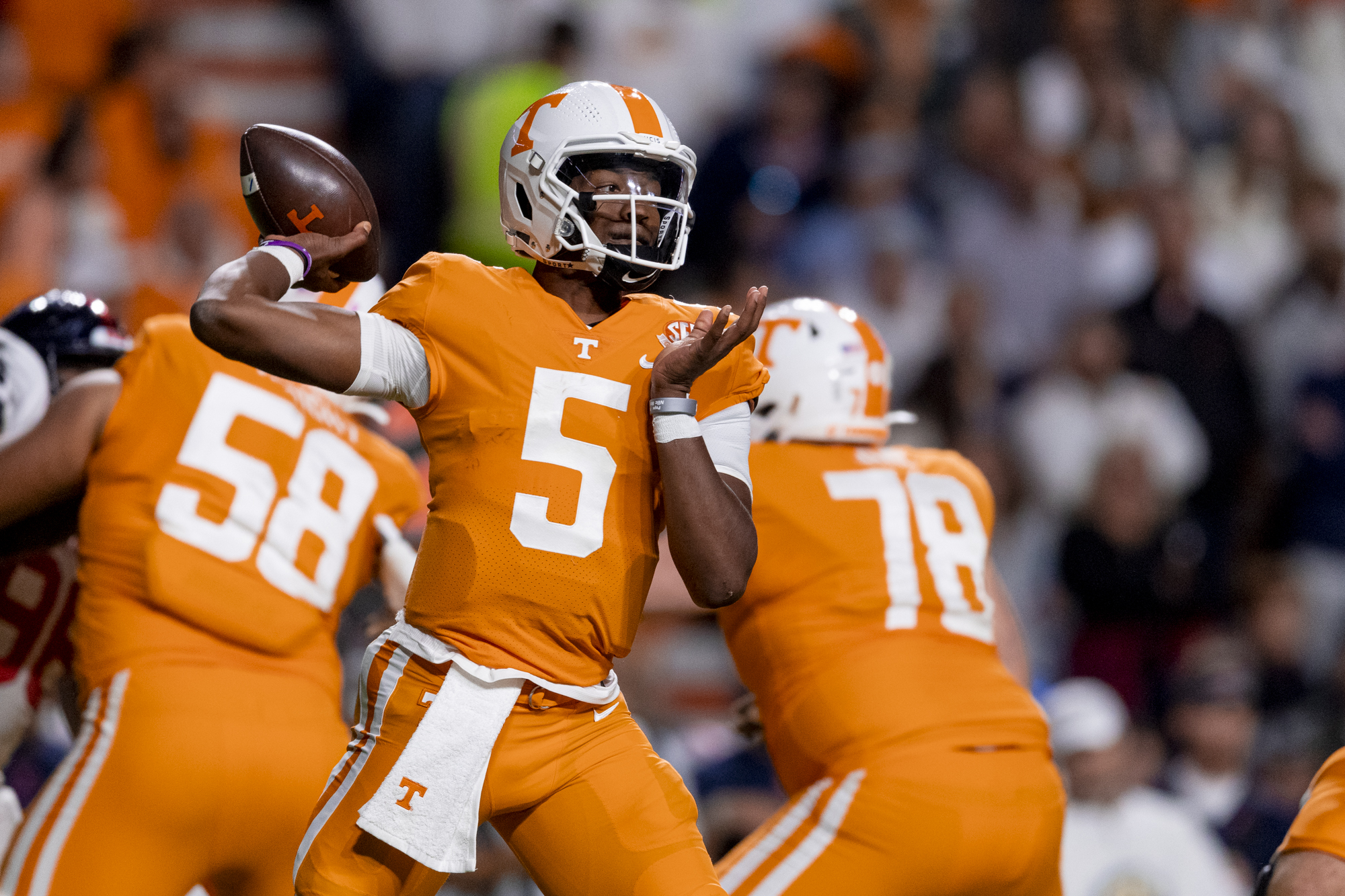
That old saying about three things can happen when you pass and two of them are bad? Well, those two things ain’t happening much this year: Hendon Hooker has a 14-to-1 TD/INT ratio, one of just 11 quarterbacks in the nation to throw less than two interceptions in 100+ passing attempts. And his overall completion percentage of 68.8% is 15th nationally.

The famine comes from getting the quarterback hit, and the Vols are giving up more sacks per dropback than ever before. Alabama’s defense isn’t quite as high on the sack list as Pitt’s or Ole Miss’s. But you’d better believe the Tide will be coming.

If Hooker can go, there’s a lot I’m excited to see in this matchup. What, indeed, can Heupel’s offense do against a Bama defense? Can Tennessee’s own defense, the surprise story of our season, make a difference against the Bama offense? Can the Vols actually stay in this game, much the way they did at Florida, and keep it interesting?

Tennessee’s ability to do so – and to keep the positive projection of their season alive – will again depend a lot on how well they can protect their quarterback, especially this quarterback, especially this Saturday.

Go Vols.

Expected Win Total Machine: Hendon Hooker Day-to-Day Edition

Whatever you want to talk about from Saturday night, the most important piece of information from Monday afternoon is:

And thus, Week 8 of the Expected Win Total Machine rides on (slightly) steadier legs:

The Vols opened at +29 against Alabama, which is down to +27.5 on Monday afternoon. Before the South Carolina win (and Bama’s loss to A&M), our expected win percentage in this one hovered around 6%. It went up to 13% last week. We’ve had plenty of years of, “I’m putting 0% for this game.” How are we feeling this week?

Ole Miss 31 Tennessee 26: What do you want to talk about first?

What’s the most meaningful story for Tennessee coming out of that game?

  • The way Tennessee played
  • Tennessee’s health going forward
  • Poor officiating
  • Injuries, real or otherwise
  • Some fans throwing trash onto the field

Spoiler alert: the answer should always be the first one.

Controlling the controllables, as multiple coaching staffs and several good therapists would say. Tennessee’s controllables were again pretty good, and are becoming pretty consistent. Hendon Hooker basically hit his average through the air: 17-of-26 (65.4%) for 233 yards (9.0 yards per attempt) for a touchdown and zero interceptions. Tiyon Evans couldn’t go, but Jabari Small was game for 92 yards on 21 carries. Hooker’s throws went almost exclusively to wide receivers, a passing game that opened up nicely in the second half: 6 for 93 for Velus Jones, 7 for 84 for Cedric Tillman.

Also approaching “pretty good, pretty consistent” status way ahead of schedule: Tennessee’s defense. Ole Miss gained 510 yards in 101 plays. That’s 5.05 yards per play. Alabama held them to 4.62. No one else has held them to less than 7.5 this season. Only Arkansas (4.86) held them to less than 5.5 last season.

Tennessee’s defense – even when facing two of college football’s best offenses from Pittsburgh and Ole Miss – has made the requisite stops to give the Vols a chance to win.

Why didn’t we win in the controllables department? Aside from not dropping a punt after you’ve earned a stop on the opening series, Tennessee’s greatest weakness is also consistent. The Vols are 121st nationally in sacks allowed, surrendering 3.57 per game. And Tennessee’s protection has also been guilty of holding penalties in crucial moments.

The Vols cut it to 31-26 with 13:41 to go last night. The next Ole Miss possession ended with the Trevon Flowers diving interception. Tennessee picked up two first downs for 1st-and-10 at the Ole Miss 42 with 11:37 to play. But they were hit for holding on 1st-and-10, and punted on 4th-and-17.

Ole Miss bled 3:30 off the clock, but the defense got a stop when Matt Corral came out of the game on 3rd-and-10. Ninety yards away from the lead, the Vols picked up three first downs on two Hendon Hooker runs and a pass to JaVonta Payton. The Vols had 1st-and-10 at the 50 with less than three minutes to play. But Hooker was sacked on first down, followed by a holding penalty on second down.

We can get in our feelings about the spot on 4th-and-24, and perhaps rightfully so. What the Vols can do better is not get in 4th-and-24.

…except now, that might be a little harder. Because Hendon Hooker went down after all the craziness, and as I write on Sunday evening, we’re unsure for how long. He did all that, plus 108 yards on the ground, behind an offensive line without the Brothers Mays and with guys that would’ve been considered third string at some point in their careers.

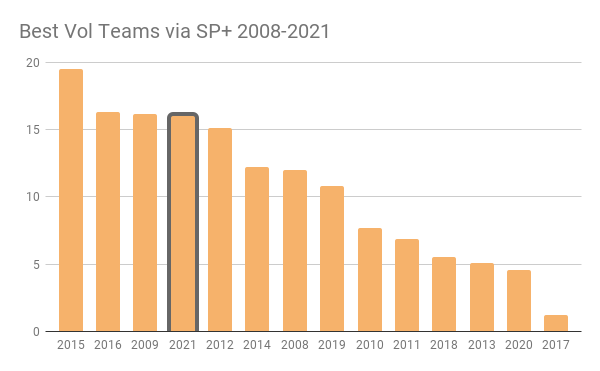
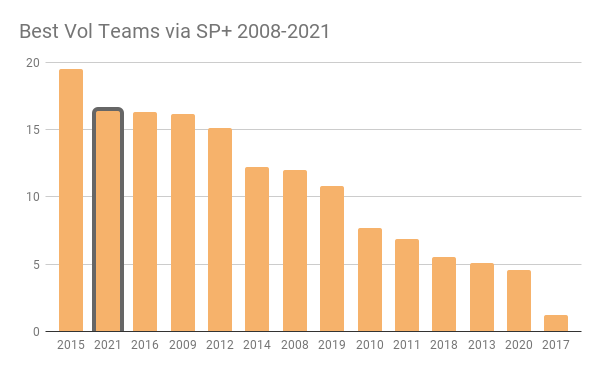
Through seven games in SP+, the Vols rank as the 15th best team in the nation with a rating of 16.0. Again, I think the best context for that is this:

The 2015 Vols are easily the best play-for-play team of the last 14 seasons in Knoxville. After that, in SP+ you’ve got 2016 (16.3), 2009 (16.2), and this team through seven weeks (16.0).

We might want to put a pin in this, because how many injuries until “this team” isn’t “this team” anymore?

But whatever happens from here, there’s so much to like about what we’ve seen from this team and this coaching staff in year one. Not in wild near misses or even a stunning upset. But in the way they play every play, which is a far, far greater positive for the future.

I also really liked the way Josh Heupel handled questions about trash on the field, simultaneously recognizing the disappointment in the behavior of a few and admiration for the environment as a whole.

The simultaneous is important here. The simplest version of the truth – usually a good place to start – is that there were legitimate reasons for Tennessee fans to be upset, and that there is never a legitimate reason to throw something on the field. The vast majority of us experienced the former without engaging in the latter.

Beyond that, there’s also a lot of nuance here, which we waded into for a bit on our podcast. Like why is it hard for people to admit both of those things are true? Who gets to be the expert on Tennessee’s reputation? Have we gotten better or worse at learning how to lose?

It’s in the nature of trash to be worthless. That’s why you’re throwing it away. I actually think garbage can be a meaningful metaphor for hell, especially the ways it might be present here on earth. Garbage tends to be obvious, it tends to smell, and thus it has to go.

I also like the way the New Testament plays with fruit and rotten as opposites. So there’s this truth that throwing something on the field is fruitless: it doesn’t do any good, it’s worthless, it stinks, etc.

But also, in the particular context of last night, throwing stuff on the field wasn’t just fruitless. It was also rotten, as in directly harmful to the very person doing it, because we still had a chance to win.

Chances are you didn’t throw a thing. I don’t know what you’re most emotional about, or most want to talk about from that game by the time you’re probably reading this on Monday. There’s a lot of good fruit and even more seeds in what we’ve seen from Josh Heupel and this team so far. How much more fruit is left in this season may depend on the health of the roster. Talking about the way Tennessee played should always be the lead story.

But wherever we may find ourselves tempted to engage whoever about what happened, or to defend an action that just shouldn’t be defended no matter how much we understand the emotion behind it? We might do ourselves a favor by considering the fruitfulness (and lack thereof) in any of this, and in the way we talk about our team.

I’m hopeful the way Tennessee plays is on its way to being not just the lead story, but a good one.

People Will (Still) Come

In 2010, updates and renovations to Neyland Stadium capped attendance at 102,455. Gone were the days of, “Let’s see just how many human beings we can get in here,” with a new attendance record always, in theory, just one or two more ushers away. That mark will probably forever stand at 109,061 from the 2004 Florida game; the Vols last crossed the 107,000 mark in 2007 against Georgia.

With those updates – and more coming that will shrink attendance further – the sell-out becomes the go-to statistic. Lane Kiffin correctly noted this week that Saturday night will be the first 102,455 in Neyland Stadium since the 2017 Georgia game. But it’s also just the 17th in the last 11 seasons, not counting last year’s pandemic model.

Those 17 include:

  • Every Florida and Alabama game from 2010-16, but not 2018 (or 2020)
  • Every Georgia game from 2011-17, but not 2019
  • 2013 Auburn & 2015 Oklahoma
  • The Sunday night Labor Day weekend opener with Utah State in 2014
  • 2014 Kentucky, the game after Josh Dobbs exploded at South Carolina
  • 2021 Ole Miss

The Rebels being ranked #13 makes it feel like a fair addition to the list. But it was interesting to me, in going back through all the announced attendance figures at UT’s official site, to see how similar contests faired in Neyland:

  • 2018 vs #11 Kentucky: 95,258
  • 2014 vs #19 Missouri: 95,821
  • 2013 vs #11 South Carolina: 95,736
  • 2011 vs #9 South Carolina: 96,655

As you can see, we’re well past the threshold of, “Ranked non-rival opponent with chance for upset.” Tennessee, of course, did get two of those games. But the house wasn’t quite full to see it.

And it’s not just Kiffin, though he doens’t hurt. But if it was only Kiffin, this game would’ve been sold out long before this week.

When it comes to attendance, here’s the most noteworthy piece of data to me:

Lowest Attendance at Neyland 2010-21

  • 2021 Tennessee Tech: 80,053
  • 2012 Akron: 81,719
  • 2012 Kentucky: 81,841 (shout out Jim Chaney)
  • 2021 Pittsburgh: 82,203
  • 2017 Vanderbilt: 83,117 (SHOUT OUT BRADY HOKE)
  • 2012 Troy: 84,189
  • 2021 Bowling Green: 84,314 (Thursday night)

Our first three home games this year are three of the seven least-attended games of the last 11 years. The other four on the list are from a fired-or-soon-to-be coach’s final season.

Certainly a factor: the pandemic. It’s why I haven’t really worried about it, or thought the comparison really valid. And it’s great that numbers in Knox County and elsewhere are trending in the right direction.

But Tennessee football has been fighting more than just the virus to get people to come. And you could see it start to happen last week. Look at the company last week’s South Carolina game finds itself in on the attendance charts of the last 11 seasons:

  • 2021 South Carolina: 89,437
  • 2011 Vanderbilt: 91,367 (Eric Gordon OT walk-off)
  • 2019 BYU: 92,475
  • 2019 Georgia: 92,709
  • 2014 UTC: 93,097
  • 2011 Cincinnati: 94,207

Last Saturday was already on pace with meaningful games from two seasons ago, when there was no pandemic. It’s also not far from an early temperature-check game from 2011 against Cincinnati, when we’d only been trying to get this thing right for a few years.

And either way, to me there’s nothing more telling than this: the Vols had 82,203 on September 11 against Pittsburgh. And we’ll have 102,455 on October 16 against Ole Miss.

I think the biggest factor isn’t the virus, or Kiffin, or the Rebels’ ranking.

The biggest factor is Tennessee.

The Vols have played their way to this opportunity tomorrow night. And the people have responded.

No matter what happens from here, I’m not sure how many people will come to the South Alabama game; Saturdays like that are probably more likely to be lower, even if case counts continue to decline into November. There are things we’ve just gotten used to, including the luxuries of staying home.

But there is no substitute for being there. And tomorrow night, there won’t be an empty seat in the house.

This season began with more reason to stay home than ever. But in no time at all, Josh Heupel’s team brought people to the threshold, even more than we’re used to seeing against this kind of opponent.

Again, what an incredible job by these guys so far to create this opportunity Saturday night.

It’s going to be a lot of fun in there.

Go Vols.

What Is Possible Now

On the Monday of Bowling Green week, we wrote our season preview: What Is Possible Today. It was post-idiot optimist, but still preseason, still time for plenty of regular old optimism to creep in. Our community expected win total was 6.74.

We talked about what might take place: struggles, early losses, more patience required. We talked about how patience would make perfect sense, but would likely lead to disengagement.

And then we talked about what might be possible. What could happen for Tennessee to surprise. That list included:

  • Joe Milton as a significant upgrade at quarterback
  • Junior college transfers Tiyon Evans and Byron Young made immediate impacts
  • The offensive line won’t suffer additional significant injuries
  • The transfer portal speeds up some of the rebuilding process
  • The window of opportunity to enjoy this team is wider than usual

At the midway point of the season, Joe Milton is no longer the starting quarterback, and Cooper Mays – perhaps the most important offensive lineman to the work of the whole – has missed significant time from the get-go.

And yet.

I’m not sure even the optimists among us saw where we are right now as possible today. And the window of opportunity to enjoy this team is due for some renovation.

Here’s our updated community expected win totals, higher in Week 7 than Week 1 for the first time since probably 2006:

Our community gives the Vols a 47.2% chance to beat #13 Ole Miss on Saturday night.

In SP+, here’s every Tennessee team of the last 14 seasons:

By tenths of a point, the current squad is playing at a more efficient level than the full-season version of 2016, and Lane Kiffin’s year one squad in 2009, just two seasons removed from Atlanta. Only the 2015 Vols have been better over the course of an entire year than the 2021 Vols have played, snap-for-snap, to this point.

Sure, we’re only halfway home, and sure, it’s tenths of a point. But if you’ve been through what we’ve been through, you celebrate anything. And this team is giving us something much closer to everything than we thought we’d come this year.

This Tennessee team has already made Saturday night possible. It is the most anticipated game in Neyland Stadium since 2016 Alabama. And it carries glorious purpose: the opportunity to announce one’s presence. Do it to Mizzou and South Carolina, okay. Win this game, and…

Well, that’s one thing about it. So often, we’ve come to a game like this and missed the opportunity for something more. Last year at Georgia. Butch Jones in a pair of checkered Neylands, against the Gators in 2014 and Oklahoma in 2015. Derek Dooley against Florida in 2012.

But we didn’t see any of those in year one.

There’s little pressure here; we’re not even entirely sure what we’re doing with this team as fans. But most of us were unsure a game like this was even possible in this year one especially.

It’s a credit to Lane Kiffin too, for getting Ole Miss to #13 in year two. Voices I trust and respect say to make this week about this Tennessee team and not about Kiffin, and I wholeheartedly agree with the sentiment. But I also don’t think the healthiest break-ups are between two people who totally ignore each other when their paths cross a dozen years later.

One thing we’ve always loved about blog form is the way words can last. Within that, there’s plenty of room for the ways we were wrong to last, for sure.

You can also go back and see something like the night Kiffin left unfolding in real time in the comments at Rocky Top Talk. It’s not as exciting as you might think: it’s mostly confusion, and lots of, “Maybe we’ll hire This Guy!” when almost none of the This Guys look like good ideas in hindsight.

There was a period there, somewhere in the Derek Dooley years, where seeing if Kiffin lost at USC felt like the best we could hope for. Then the first time he returned, as an Alabama assistant in 2014 – now seven long years ago – Josh Dobbs impressively grabbed our attention and held it for another two years.

The idea then, and now, was that the best revenge is living well. It was, of course, a lot to ask for the kind of living that comes from beating Alabama.

On Wednesday evening, Tennessee is +2.5 against Ole Miss.

We’ve seen big upsets in year one. Butch Jones got #11 South Carolina at +7, Jeremy Pruitt got #21 Auburn at +14.5. They were incredible surprises on a Saturday afternoon. But Josh Heupel and his team, in a very short span, have created a virtual toss-up opportunity with a Top 15 team in year one. The kind, like 2012/14 Florida and 2015 Oklahoma, where you know what victory would mean…and know you’ve got a chance to do it.

Just to have this opportunity this week has been a gift, a delightful surprise. Great job by Heupel and these guys to get here. There are plenty of Saturdays out in front of them for their story to be told. We’re already living well.

But what is possible now is to win Saturday night. To speak some words into Tennessee football and make a memory that would have a chance to live for a long time.

Just the thought of it makes me smile. And whatever you think of Kiffin, that’s the dominant emotion for me this week. What a ridiculous, delightful notion that this kind of game even exists for us in Week 7 of Year 1 of Year 13 of trying to get this right. What an incredible opportunity.

Might as well win it.

Go Vols.