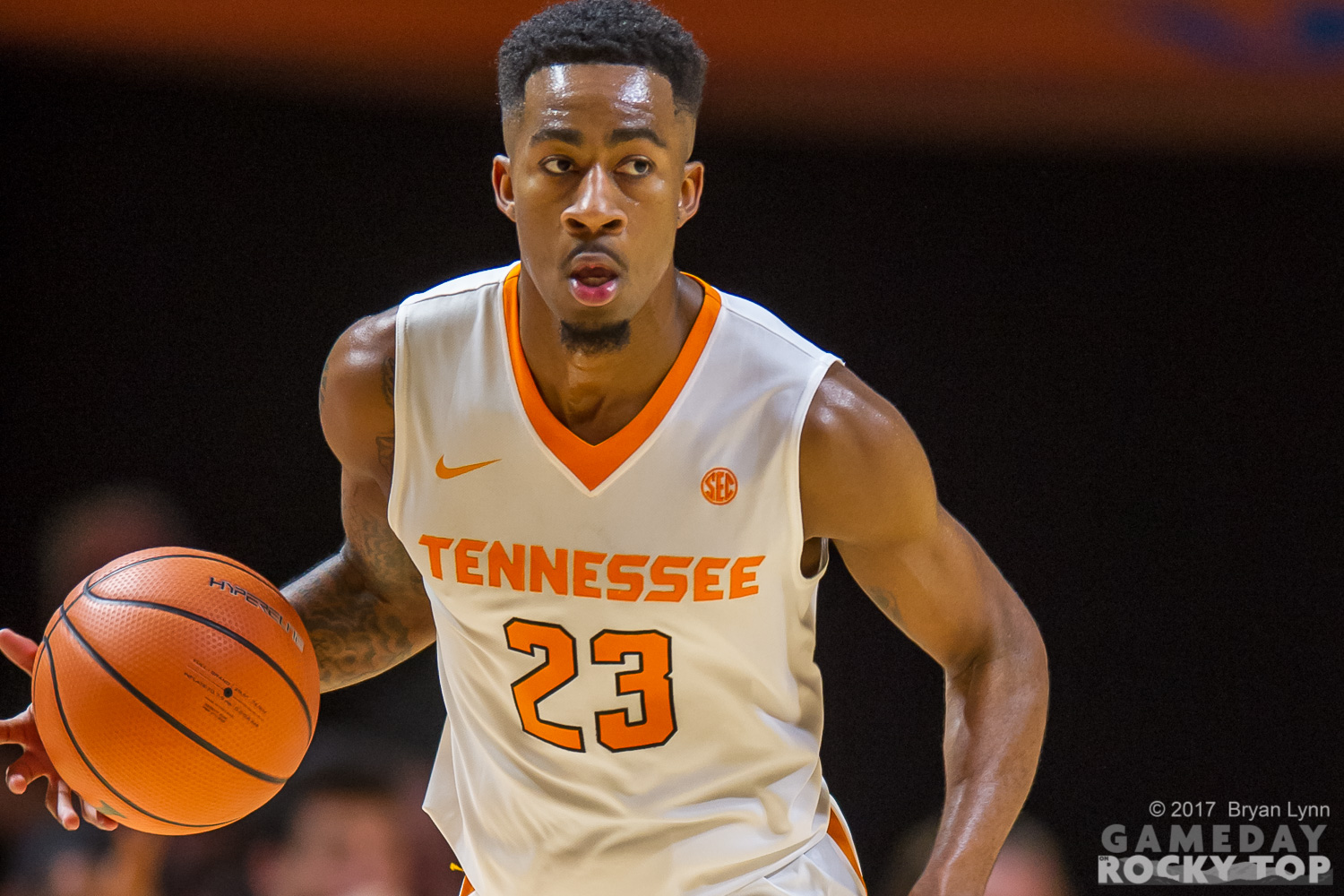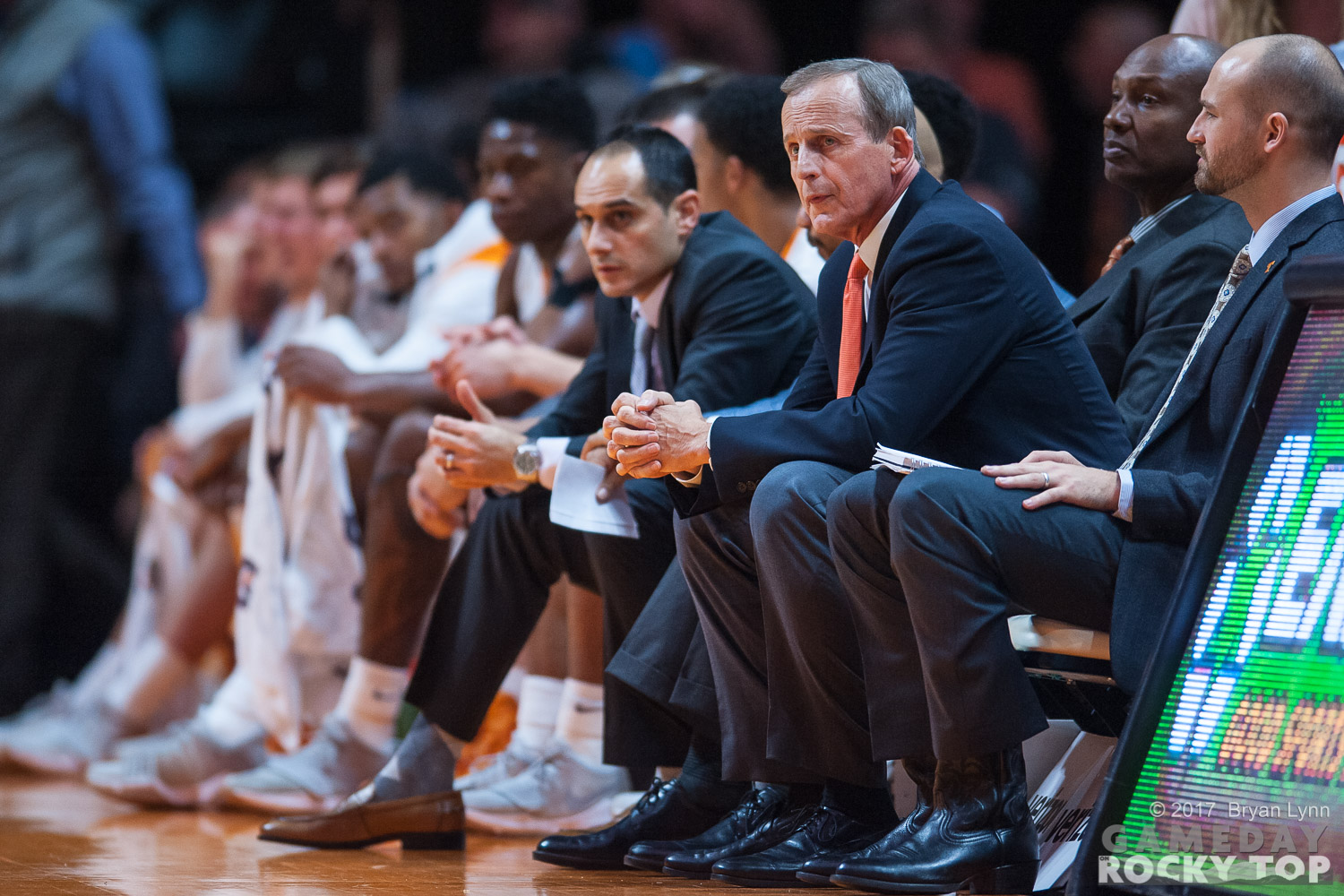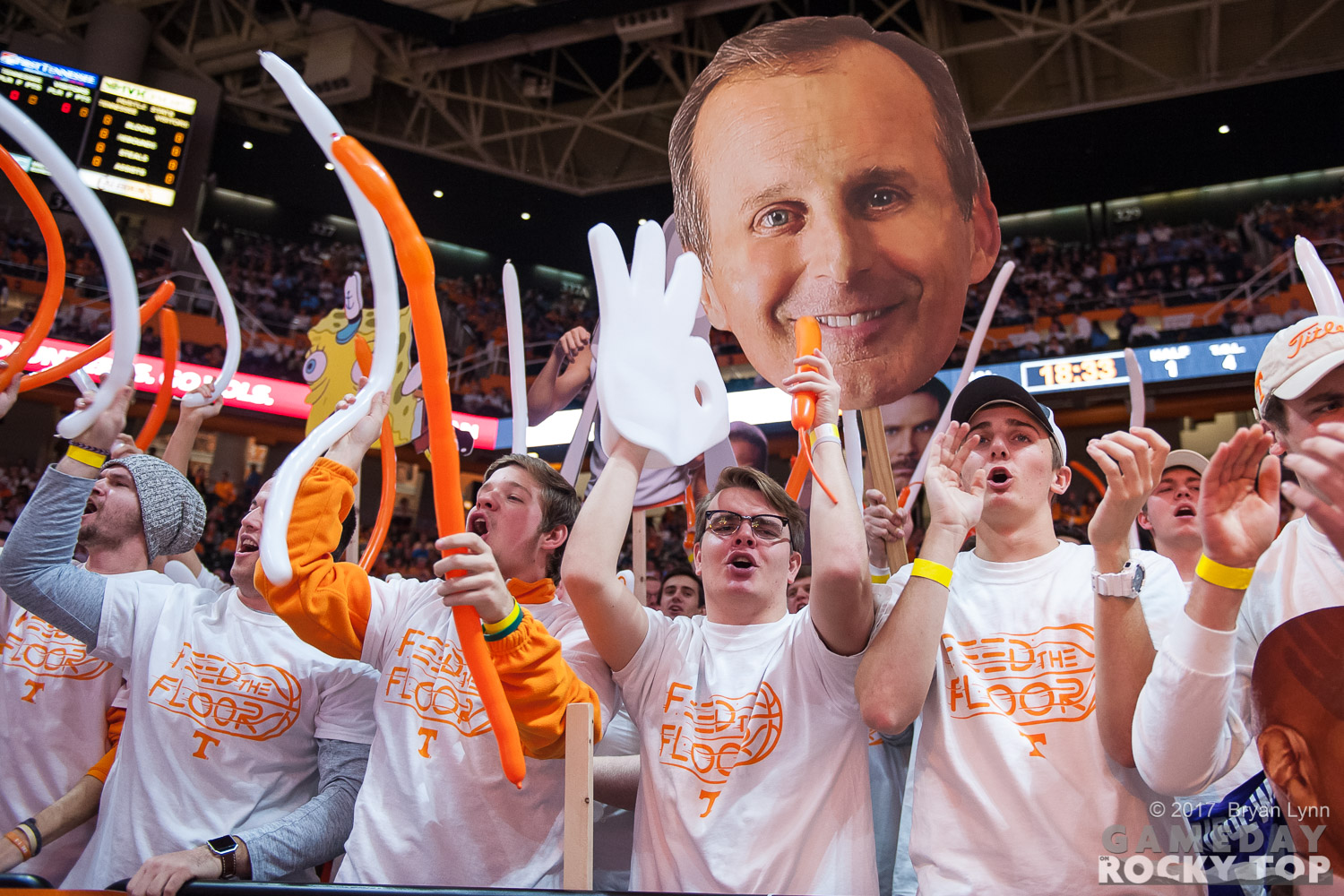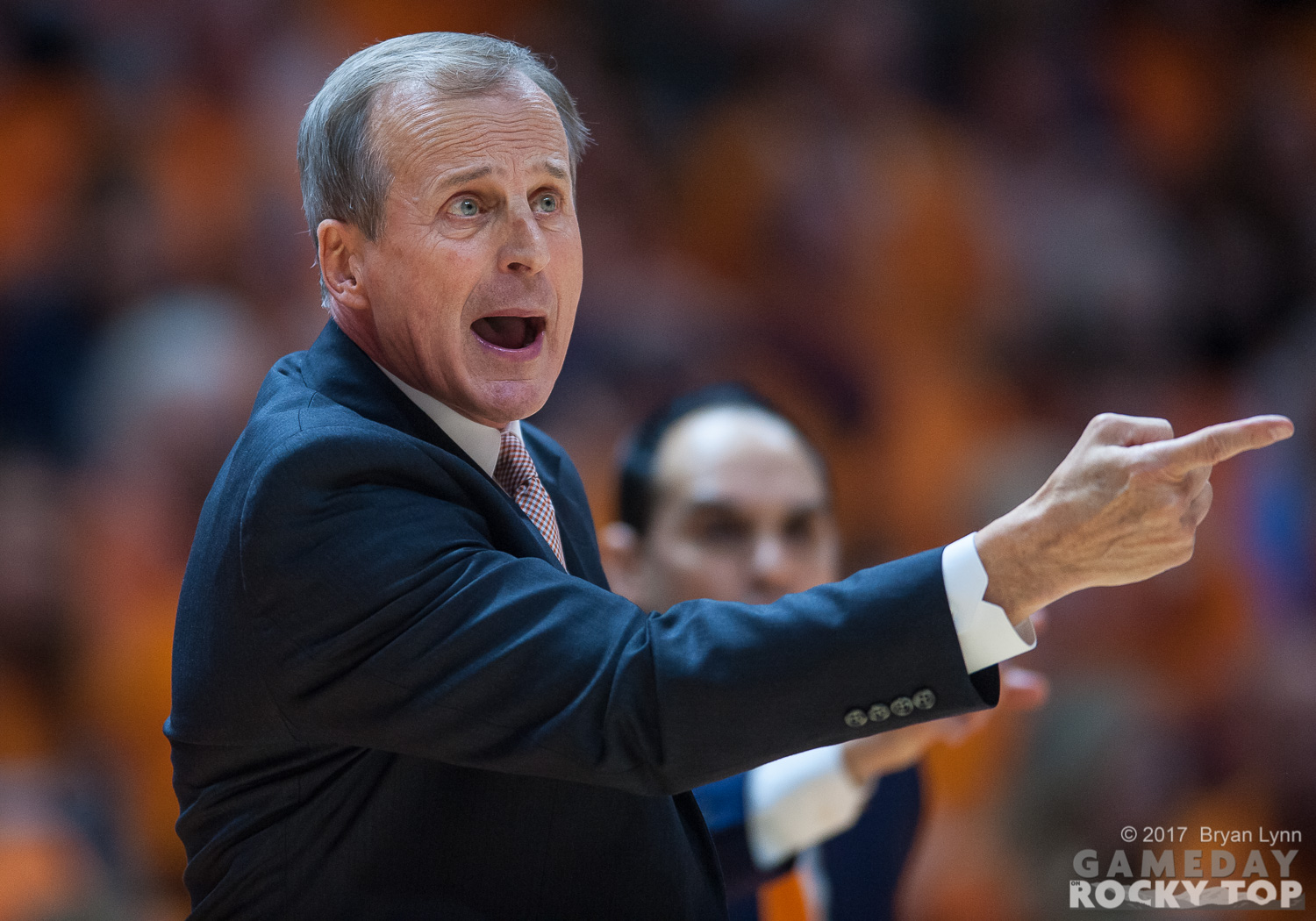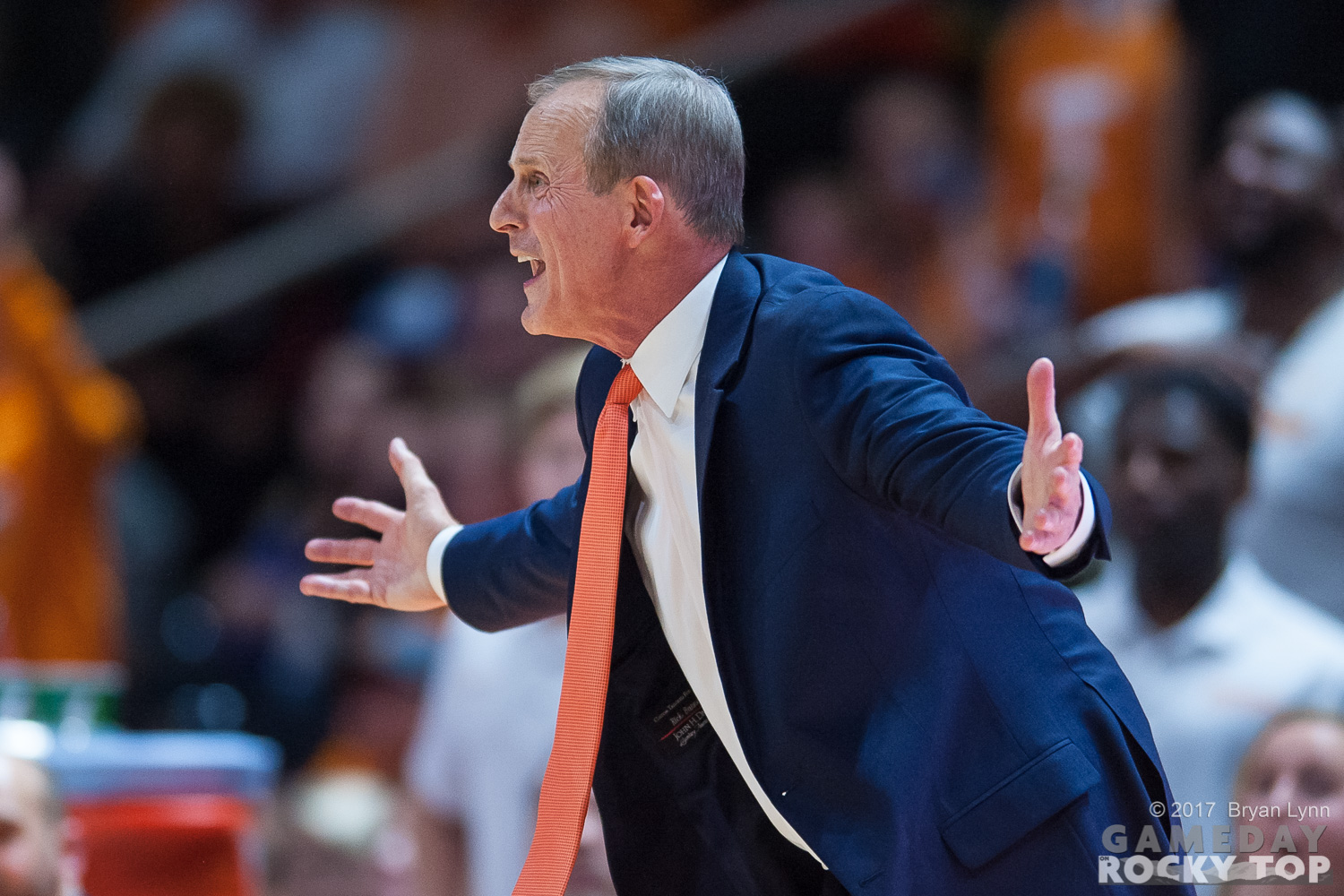
Tennessee 92 Vanderbilt 84: Yep, we can win this way too.

Tennessee took Vanderbilt’s best punch in the first half, and the Commodores continued to throw blows deep into the second. A Vandy team that loved to shoot threes but had struggled to make them erased that problem in the first half with an 8-of-15 performance, pushing their lead to 10. Quietly, the Vols were hot as well. In the second half, a more perimeter-focused defense held Vandy to 3-of-11 from the arc. The trade-off was better looks at the rim, particularly for freshman Saben Lee. His 21 points could have been the story.

But Tennessee’s quiet heat from the first half was an eruption in the second, and the night ended with, “It’s great…to be…” ringing through Memorial Gym. The Vols shot 56.6% from the floor, 7-of-13 from the arc, and 25-of-28 at the free throw line.

The Vols got the lead in a little more than seven minutes in the second half, sparked by Jordan Bowden. The two rivals continued to trade blows for the next three minutes, with Vandy’s last lead coming with 9:12 to play. Free throws from Matthew Fisher-Davis cut it back to two at 7:10. But from there, Vanderbilt’s punches lost their power. And Tennessee body-blowed them to death with Grant Williams, before Jordan Bone delivered the knockout with a three to put the Vols up 10 with 2:44 to go.

But it was Williams who did the real damage all night long, turning in one of the greatest performances of the post-Allan Houston era at Tennessee.

37 points was not only a career high, it is the most any Vol has scored since Ron Slay got 38 in 2003. That means tonight Williams, who scored 30 twice last year, passed the career highs of Steve Hamer (31), Scotty Hopson (32), Jordan McRae (35), Chris Lofton (35), and Kevin Punter’s 36-point game two years ago. He did it on just 20 shots, making 12 while adding 13-of-15 at the line.

Tennessee has played so many good teams this year, we’ve gotten used to seeing the opponent have a better answer for Williams. Vanderbilt, without Kornet in the middle, had none. And it was obvious from the opening tip, a glimmer of hope at halftime that Williams’ automatic looks from the paint were more likely to keep falling than Vanderbilt’s threes.

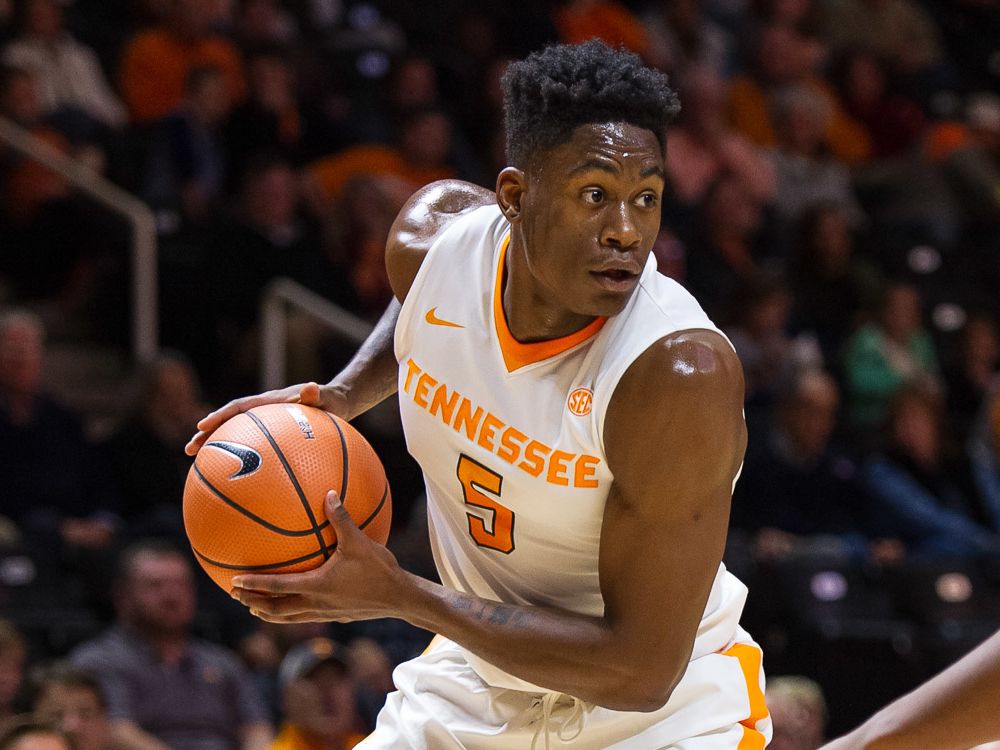
And Williams doesn’t get 37 without Adrmial Schofield getting 22, following up his 21 from the Kentucky win. He added nine rebounds, four of them offensive.

That glimmer of hope even when the Vols were down 10 on the road at Memorial? It’s one of the signs of a really good team: you learn not to give up on them, or even to panic. There may be other down-10’s in this year’s SEC. But the Vols – other than a few late minutes against pressure from North Carolina and Arkansas, and what looks less and less like an off night against Auburn – are remarkably steady.

Tennessee thrived in the non-conference with defense; they’ll probably have the lowest field goal percentage defense in the SEC through four games, and they should be 3-1. The Vol offense has been at its best all year when driven by great ball movement and assists. Tonight, Tennessee just got the ball to its best player and got out of the way. And it’s been a long time since we’ve seen a Tennessee team willingly get into a game they need to score 90 points to win, and do just that, on the road. But yep, this Tennessee team checked that one off tonight too.

Just a big, satisfying win with a historic performance from Tennessee’s best player. The Vols go to 11-4 (2-2) and crack the Top 15 in KenPom. Up next is Texas A&M, ranked fifth in the AP poll at the start of SEC play and now 0-4 after a last second loss at Rupp. There are no nights off, but a Tennessee team capable of winning multiple ways is built to last in this conference.

Go Vols.
Tennessee at Vanderbilt Preview

How’s the Kevin Stallings/Vanderbilt break-up going in year two? The ‘Dores lost in Dayton in Stallings’ last year, then became the first team to earn an at-large bid with 15 losses (as a 9 seed!) under Bryce Drew before a heartbreaking end against Northwestern in round one. So far this year Vanderbilt is 6-9 against the nation’s 10th most difficult schedule. Stallings, charming as ever, had the first losing season in 17 years at Pitt in year one, and is currently 8-8 with three double digit losses to open ACC play.

There’s no Luke Kornet, but all the other names you know and love are back:  Jeff Roberson, Matthew Fisher-Davis, and Riley LaChance all average between 11-15 points while playing 28-32 minutes. Freshman guard Saben Lee adds another 10.5 points. There’s a problem from there, though:  no one else averages more than five points per game, a hodgepodge of seven other guys playing between 11-18 minutes.

Vandy beat Alabama 76-75 last week for their first SEC win. Their next best win this season is your choice of Radford or UNC Asheville. But all of their nine losses are to teams projected to finish in the RPI Top 100, six of them in the RPI Top 50. Only a couple were particularly competitive – an overtime loss to then-#10 Southern Cal, home losses to Kansas State and MTSU by a combined eight points in the same week – but I wouldn’t sleep on this team just yet.

What Vanderbilt does well:

  • Let it fly. Vandy takes 26.1 threes per game, and leads the SEC with 85 in their first three conference games. There’s a stark contrast on the stat sheet:  LaChance shoots 43.7% from the arc, Roberson 41.9%, and then a fairly significant break. MFD is at just 33.7%, Payton Willis at 35.3% off the bench, and there are a bunch of guys shooting percentages with a 1 or 2 in front of them. The team shoots 32.7%, 278th nationally. This reeks of a team that could suddenly get hot (and they did hit 10-of-25 against Alabama), but so far, being not so good on percentage hasn’t kept them from taking them.
  • Limit turnovers. The Vols feasted on Kentucky in this department, but will find a different and much more experienced animal in Nashville. Or at least that was the case until South Carolina turned them over 19 times in their last game. Before that, the Dores averaged just 9.8 turnovers in their previous six games.
  • Defending threes. Opponents shoot 31.4% against Vanderbilt from the arc, 47th nationally. This hasn’t made a big difference in wins/and losses:  the ‘Dores have five losses where the opponent shot less than 30% from the arc, which is fascinating. The Vols did a good job against Kentucky getting open threes against a team that typically limits their effectiveness; they’ll need more of the same here.

What Tennessee can do to win:

  • Defensive excellence returns. Tennessee is still 14th nationally in defensive efficiency via KenPom, in part because we’ve played the nation’s third toughest schedule by offensive efficiency. And the Vols beat Kentucky despite allowing 46.2% from the floor. But the Vols are allowing 46.5% in three SEC games, worst in the SEC. The Vols, of course, have played three excellent offenses. But now, against a team that loves to shoot threes, on the road, in a rivalry game…the best way to win is for Tennessee’s defense to take all of that out of the equation with a return to its own excellence.
  • Complement good offense at the free throw line. Tennessee’s assist rate has been a big story all year. But the Vols are backing that up with good work at the line in SEC play:  66-of-87 (75.9%) is first in makes, second in attempts, and fifth in percentage through three games. Grant Williams is what you’d expect with an average of 4.8 free throw attempts per game. But the rest of the scorers have been really good here too:  Schofield, Bowden, and Turner all have 38 attempts this year, and Jordan Bone has 42. Everybody can attack and everybody can get to the line, on top of a strong ball-sharing offense to begin with.
  • Handle success. The Vols only had 24 hours to process their win over Purdue, but came out hot against Villanova before falling short. There’s a little more distance between the Kentucky win and this trip, and the Commodores aren’t as good on paper as many of the teams the Vols have already faced this year. How will Barnes have his guys ready to go tonight in Nashville in a taking-care-of-business situation?

We continue to have the television schedule of a team picked to finish 13th in this league instead of the one currently ranked first in KenPom and RPI:  9:00 PM ET, SEC Network. Go Vols.

Tennessee’s Assist Percentage Continues to Amaze

Kentucky has a bad habit of having guys an undersized Tennessee team just has no good answer for. Last night it was PJ Washington: 13 points on 6-of-8 shooting, plus three steals and two blocks. He did all of that in just 23 minutes, which is impressive, but ultimately helpful for Tennessee, as cramps kept him from playing any more than that. Last year it was Bam Adebayo, who had 21 points on 7-of-8 shooting in Knoxville.

But Tennessee has countered with effective play from undersized forwards against Kentucky’s bigs. Two years ago Armani Moore had 18 points and 13 rebounds in Knoxville. Last year Admiral Schofield had 15 points off the bench. And last night, Schofield had 20 points, 9 rebounds, 4 assists, and 4 steals in one of the best games of his career. And the Vols have three straight wins over Kentucky in Knoxville (and seven of the last eleven).

The Vols broke what had been their hardest and fastest rule this season:  hold the other team under 40% and win, don’t and don’t. Kentucky shot north of 55% in the first half and still finished at 46.2%. Only Arkansas has done better against the Vol defense this year.

But though the defense struggled to find its footing early, the Vols took the thing they were best at – successfully sharing the basketball – and did it better than ever last night. Tennessee had 23 assists on 25 made baskets, 92%. With a flu-ridden Jordan Bone playing only nine minutes, James Daniel and Lamonte Turner picked up the slack with 11 assists between them. And the Vols also worked inside out, as Schofield, Grant Williams, and John Fulkerson combined for another 11 assists.

It is, obviously, the best performance of the year by assist percentage, and significantly better than anything the Vols had done against a power conference opponent (70% against NC State is the next best performance). Tennessee is back up to fourth nationally in that stat at 66.8%; Michigan State, the nation’s new number one (but probably not for long after a loss to Ohio State), is the new leader. Look at how good the performance against Kentucky was compared to the best game in assist percentage in previous years:

  • 2017: Appalachian State (74.3%)
  • 2016: Gardner-Webb (75%)
  • 2015: Tennessee State (78.3%)
  • 2014: Tusculum (85.7%)
  • 2013: Mississippi State (67.9%)
  • 2012: South Carolina (73.7%)
  • 2011: Auburn (73.9%)

That’s as far back as the advanced gamelogs go at Sports Reference, but consider the Vols also cracked 80+% this season against Lipscomb (88%) and Mercer (86.7%). Tennessee has successfully shared the ball better in three games this season than in any other game in at least the last seven years. And the top performance came against Kentucky.

As I type on Sunday evening, Tennessee’s strength of schedule is second nationally in RPI, fourth in KenPom. That’s so impressive that, last year, you could make a legitimate argument for Tennessee as an NCAA Tournament team when they surged to number one in strength of schedule after beating Kentucky and Kansas State back to back…to get to 12-9 overall. This team is 10-4 with two RPI Top 15 victories at the moment. And at the same moment, the Vols are the highest rated SEC team in both RPI and KenPom.

Look, this league is going to get nuts. The only winless team is the one that was in the top five when conference play started 10 days ago. The only undefeated teams are Florida, who was in free fall 10 days ago and needed heroics to beat Missouri on Saturday, and Auburn, suddenly allowing us to make the argument that all four of Tennessee’s losses are to really good teams. The entire league is still in the KenPom Top 90. There are no cupcakes on the menu. That Tennessee could be objectively considered the best team in a league like this right now? It’s quite the accomplishment, one that fittingly includes a win over Kentucky.

Lots of work left to do. But lots of good work already on this resume. Don’t stop now.

Go Vols.


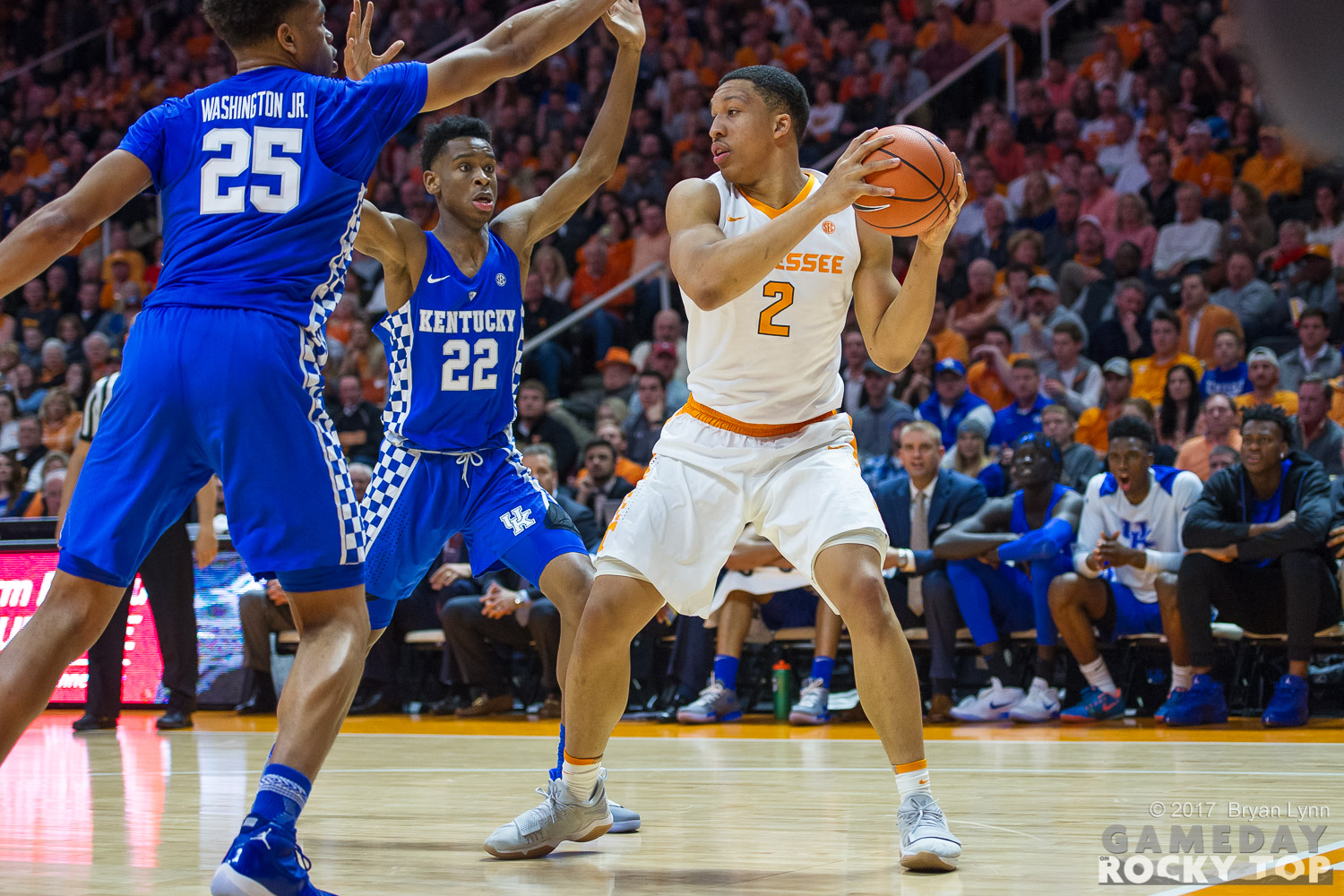
Vols beat Kentucky, 76-65

Tennessee overcame a rough first half and pulled away in the second to beat the Kentucky Wildcats 76-65 in Thompson-Boling Arena this evening. Admiral Schofield led the way with 20 points on 8-13 shooting, and he added 9 rebounds, 4 assists, 4 steals, and a block, not to mention the exclamation point slam in the final seconds.

Grant Williams and Lamonte Turner each also hit double figures, and the team held Kentucky’s Kevin Knox and Hamidou Diallo to 6 and 5 points, respectively.

The game marked Tennessee’s third straight win over Kentucky in Knoxville for Rick Barnes’ team. Heading into the game, Kentucky’s three-point defense (29.2%), shot-blocking, and offensive rebounding were the concerns. Not to worry, as the Vols hit 8 of 22 three-pointers (36.4%), and Kentucky blocked only 4 of Tennessee’s 55 shots and rebounded only 8 of their own 52 attempts. Tennessee turned Kentucky over 16 times.

The win brings Tennessee to 10-4 overall and 1-2 in the SEC, two games behind 3-0 Florida. Up next is Vanderbilt, on Tuesday at 9:00 p.m. in Nashville.

Tennessee Vols Get Monstrous Recruiting Puzzle Piece in JJ Peterson


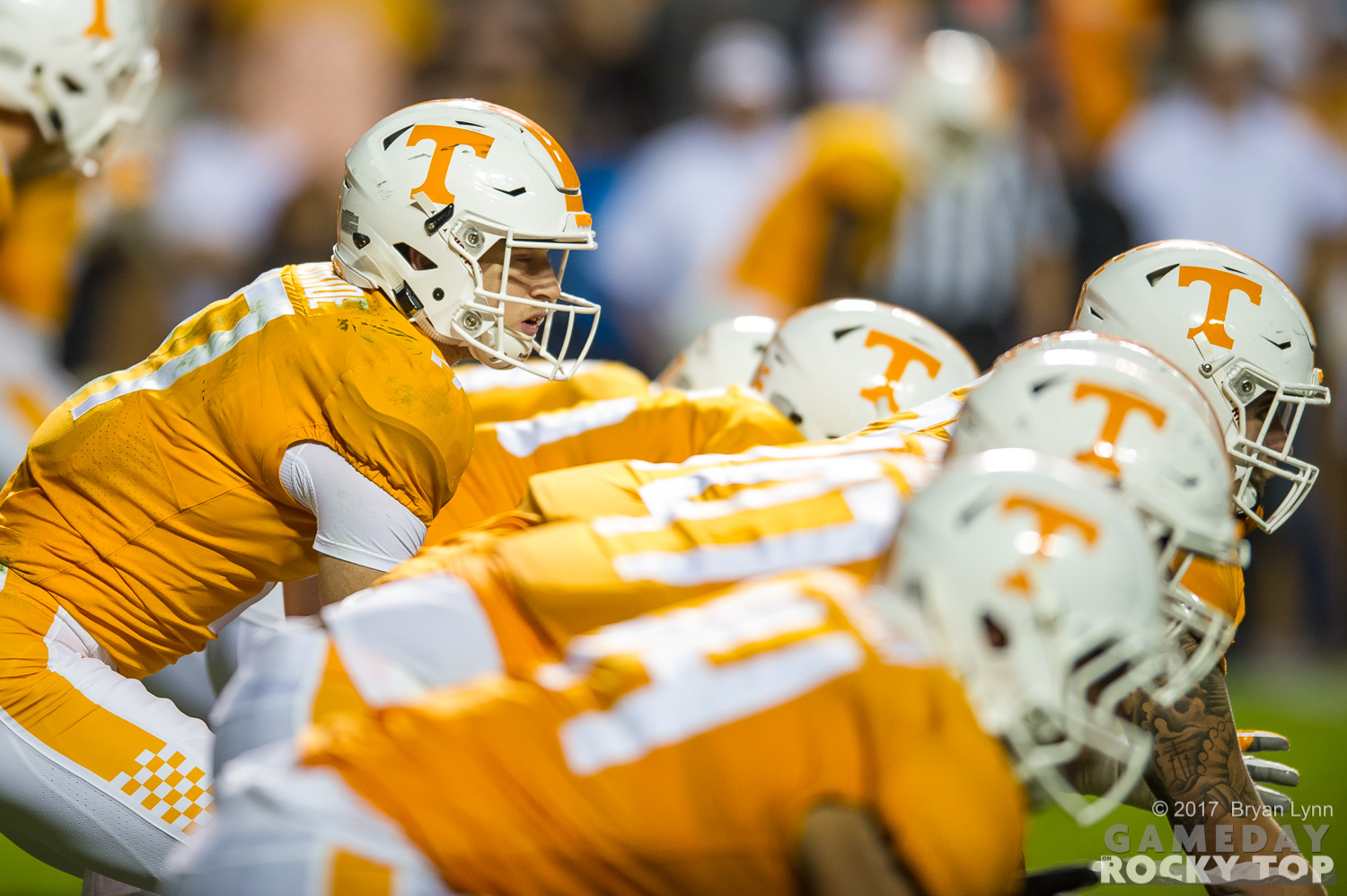
If you watched Tennessee play football in 2017 and you then watched Alabama’s performance in the College Football Playoff semifinal trouncing of Clemson, you know the Vols have a long way to go to get to that level.

But it’s a strong first step that UA’s defensive coordinator Jeremy Pruitt will be leaving to become Tennessee’s head coach, and the staff he’s built in Knoxville proves he’s serious about bringing a top-tier defense.

Now, all he needs are the players.

UT got one of those players on Saturday afternoon when 4-star outside linebacker JJ Peterson chose Tennessee over a host of other top schools — including long-time leader Alabama — during the U.S. Army All-America Game.

“Peterson is a really athletic, versatile linebacker, the type of player Tennessee is going to need to run the kind of defense Jeremy Pruitt wants to run,” GoVols247 recruiting analyst Ryan Callahan told me earlier today. “He’s capable of coming in and starting right away, or at least playing a significant role from Day One.

“It’s a huge pickup, to say the least, for Pruitt and his staff. And it’s the best example yet of the types of relationships Pruitt can build and the big-time recruiting battles he’s capable of winning. Peterson hasn’t even been to Tennessee’s campus yet, and the Vols just beat out Alabama to land him less than a month after Pruitt’s hiring. That’s the kind of addition that really sends a message.”

With Pruitt’s deep ties in Alabama and Georgia, it wouldn’t be a surprise to see UT starting pulling kids of Peterson’s ilk every year from those areas. It doesn’t hurt that the Vols’ defensive coordinator Kevin Sherrer is Georgia’s linebackers coach and a dynamic recruiter. Add Charles Kelly, Chris Rumph and Tracy Rocker to the staff, and that’s a group of defensive coaches who can make a dent on the recruiting trail.


As for Peterson, he’s an electric athlete that has the kind of speed on the second level the Vols don’t currently possess. The 6’2″, 210-pound defender from Colquitt County (Georgia) plays for legendary coach Russ Propst and was a high school teammate of current Vols Ja’Quain Blakely and Shawn Shamburger. That’s not a bad pipeline for UT to have.

Peterson is the nation’s second-ranked outside linebacker, according to 247Sports, and he has high marks in all of his agility ratings. According to his profile, his evaluation is as follows:

“When you watch Peterson, he is a blur at times between the lines. He is an outside linebacker you see make plays in space, get to the quarterback off the edge, and one that can drop into coverage and hold his own. He plays with aggression, effort and speed at all times. He has great size and he explodes through the ball carrier when he makes the tackle. He has all the traits you look for in an elite linebacker. He could play outside or inside on the next level.”

That’s huge news for a Tennessee team desperately needing playmakers to pair with studs on the defense like Nigel Warrior and Darrin Kirkland Jr., who’ve been under-coached during the Butch Jones era. The Vols lost one of those this week when Rashaan Gaulden elected to forego his senior season in orange for a shot at the NFL.

Peterson, as Callahan said, possesses the ability to start or at least contribute right away. If UT transitions to a 3-4 base package, as expected, it will need all the linebackers it can get. Guys like a healthy Kirkland will certainly be on the field. Others such as Daniel Bituli, Will Ignont, Solon Page III, Quart’e Sapp, Austin Smith, recent JUCO signee Jordan Allen, and Shanon Reid give the Vols depth at the position, but only Kirkland and Bituli are proven commodities.

Peterson is an athlete who will be difficult to keep from the field. His pledge surges UT to 16th nationally and fifth in the SEC, according to 247Sports. That’s not bad considering the Vols were in the 60s when Pruitt came on board.

This coup is the biggest of the 2018 cycle, surpassing Alontae Taylor and Dominick Wood-Anderson. DWA also had UA out front until Pruitt swept in and stole him on JUCO national signing day, so that’s two major pieces of the puzzle who are expected to step right in and contribute immediately.

Peterson’s pledge is a sign of things to come, and if the Vols can add players like Peterson’s good buddy and current Alabama commitment Quay Walker, stud cornerback Olaijah Griffin and others, this may not be such a stretch to think Tennessee could be much-improved on the defensive side of the ball in 2018.

Vols Find Strength & Conditioning Coach in Houston Texans’ Craig Fitzgerald

New Tennessee head coach Jeremy Pruitt has found the man he expects will prepare the Vols to morph into a bigger, more physical SEC program. On Friday, the Houston Chronicle reported that Craig Fitzgerald resigned from his post with the NFL franchise in order to come back to college and lead the Vols.

Fitzgerald replaces Rock Gullickson, another long-time, respected NFL strength coordinator who was hired by coach Butch Jones and left with the entire staff besides Robert Gillespie. Fitzgerald has that blend of being a young, energetic guy while also being a veteran with as good a resume as Tennessee could hope.

A friend of mine works in the Texans’ front office, and he had this to say of Fitzgerald:

“Super good dude. I’ve really enjoyed getting to know him. I guess I’ll just have to hope our next guy is as cool. From a football perspective, I think it would be hard to find a guy with much better of resume. I don’t know a whole lot about the options that are out there, but it’s hard to be disappointed with a guy that has experience at several power five schools (including the SEC) on top of four years with an NFL team.”

This seems like a coup on the surface for the Vols. Fitzgerald was with Bill O’Brien during a successful run at Penn State before following him to the NFL. He was also the South Carolina Gamecocks’ S&C coordinator under Steve Spurrier for three years.

Here’s a video with Fitzgerald talking about some of his methods. This Men’s Health article sheds a little more light on Fitzgerald, who is widely respected in his profession. Buddy Zach Ragan over TennTruth has some quality info on Fitzgerald, too.

This is perhaps the most important low-profile job UT can possibly fill, so it’s essential that Fitzgerald is a home run, and in scouring the Interwebs, I haven’t found one negative thing about it. Under Jones’ regime, the strength and conditioning program was in shambles, and Butch’s botching of that position arguably escalated his demise.

Jones brought Dave Lawson with him from Cincinnati, and though Lawson was unheralded, the Vols seemed to be turning a corner under him after Derek Dooley’s revolving door of S&C coordinators did UT no favors, either. When Lawson and some players and coaches butted heads, Jones removed him and gave the job to associate coordinator Michael Szerszen, which was a complete disaster.

Following Szerszen’s disastrous year, Gullickson was brought in — but you can’t fix strength issues in one year, and the Vols had their share of them. Obviously, Jones’ philosophy was flawed when it comes to the type of body molding he wanted, because Tennessee routinely got pushed around on both lines of scrimmage during the regimes of both Jones and Dooley. Also, as injuries piled up the past two seasons, it became clear there were physical issues.

Now, the Vols turn to Fitzgerald as they hope to rebuild their roster to transition to a 3-4 defense, a pro-style, man-blocking scheme on offense and, most importantly, a quality, capable team that can actually compete in the SEC.

Fitzgerald has his work cut out for him.

Tennessee vs Kentucky Preview

The Vols have won six of the last ten in this series in Knoxville, including the last two. On the surface it might feel like these two teams are going in completely different directions:  the Vols are a frustrating 0-2 in league play after a stellar run through the non-conference, while Kentucky followed up a frustrating loss to UCLA with an absolute beat down of Louisville and a 2-0 start in conference. But Sagarin gives the Vols a 46% chance to win; I’d expect another close one.

Close is going to be the nature of the beast every night in this league. Of the ten SEC teams to play two conference games, only two (the usual suspects from Florida and Kentucky) are 2-0. The Cats themselves beat Georgia and LSU by a combined eight points. Texas A&M was the best team in the league a week ago, now they’re 0-2 with a 22-point loss at Alabama and a 17-point loss at home to Florida. Welcome to this year’s SEC.

This Year’s Lexington D-League Squad

We bid farewell to Malik Monk, De’Aaron Fox, Bam Adebayo, and Isaiah Briscoe. In their place are, you guessed it, five freshmen.

6’9″ Kevin Knox gets 14.6 points and 6 rebounds, with 6’5″ Hamidou Diallo just behind at 14.4. Facilitating much of this is 6’6″ Shai Gilgeous-Alexander with 12.1 points, 4.1 assists, and 2.3 steals. 6’7″ PJ Washington goes for 10.6 and 5.3 rebounds, and 6’0″ Quade Green adds 10.5 per game. Knox is on the floor by far the most at 33.1 minutes per game.

What Kentucky does well:

  • Defending the three-point line. The Cats give up an impressive 29.2% from the arc, ninth-best nationally. Georgia and LSU went 8-for-45 (17.8%). Tennessee hasn’t been living from outside, and as many have noted, Jordan Bowden could probably use an even greener light. But the length and athleticism you can assume from a Calipari squad is once again making it difficult for opponents from the arc:  last year they finished 12th nationally in this stat.
  • Two things Auburn was good at:  shot-blocking, where the Cats are 20th nationally in block percentage, sending back 15.7% of opponent shots. PJ Washington is a factor here, but two guys playing fewer minutes are also really strong:  Nick Richards averages 1.4 blocks in 16.9 minutes, and Wenyen Gabriel averages 1.4 in 22.8.
  • …and offensive rebounding, hooray! After Auburn’s absurd performance Tuesday where they rebounded half of their misses, the Tigers are fifth nationally in offensive rebounding percentage at 38.1%. Kentucky isn’t far behind at 36.6%. I don’t know if we should be worried about seeing the same problem twice in a row, but I’d imagine Barnes is happy to have the teaching moment.

What Tennessee can do to win:

  • Turn Kentucky over. If a young Calipari team is bad at something…it’s free throw shooting, of course (68.8%). If there’s a second option for this team, however, it’s turnovers. UK is 199th nationally in turnover percentage, giving it away on 16.6% of their possessions. Tennessee is 61st nationally in opponent turnover percentage at 19.2%. The home floor can help. The Vols have not been shy about going up-tempo when the opponent wants to run; if that happens here, Tennessee needs to come out on top in the turnover department. The Cats had 18 turnovers in their loss to Kansas; 12 of them were steals.
  • Be the more mature team. Sometimes the non-juggernaut Calipari teams take a minute to adjust to the night-in, night-out grind of SEC play. The 2016 team started 3-2 in league play, 2-1 in 2014, 3-2 in 2013, and 5-5 in 2011. Tennessee obviously isn’t setting the SEC world on fire right now, but has far more experience with this routine and could take advantage.
  • Bring the necessary effort. I’d wager what happened on the offensive glass against Auburn won’t happen again, at least to that extent. But Tennessee also has to focus in if it wants to keep living in the same conversations the Vols have enjoyed since the Bahamas. Winning this one should keep Tennessee in the Top 25, would give another Top 25 win to their resume, and allow the Vols to keep thinking about contending for the SEC title and a favorable seed in the NCAA Tournament. But an 0-3 start in league play keeps you out of the conference title conversation by default, and would swing the overall conversation back to, “Wait, let’s just make sure we get in this thing.” The Vols have been better than that for the majority of the year. The necessary effort against Kentucky is a 40-minute effort; many, many Tennessee teams as good or better than this one have played 32-to-36 good minutes against the Cats and lost by 6-10 points. I’d expect Barnes to get more out of this team Saturday night than he did on Tuesday. And as it’s done all year, that should be enough to give Tennessee a chance to win.

It’s just the 15th ranked vs ranked game for the Vols at Thompson-Boling; the Vols are 10-4 in those games after the loss to North Carolina. A late tip for your Titans playoff viewing pleasure:  9:00 PM on the SEC Network. Go Vols.

Auburn Dominates the Offensive Glass in 94-84 Win

The Vols led 28-14 ten minutes into the game, but it only took Auburn five minutes to erase that lead. The Vols led 61-56 with 8:30 to play, but Auburn was up 80-68 a little more than four minutes later.

When things got away from Tennessee today, they got away in a hurry. This scene played out at the end of the Arkansas game due to foul trouble, but today the Vols’ struggles were more troubling: dominated on the offensive glass at home.

And dominated is an understatement. Auburn finished with 22 offensive rebounds, only getting more defensive rebounds (24) because they grabbed two in the final seconds with the game out of reach. The Tigers rebounded half of their misses. The result:  74 shot attempts to Tennessee’s 58. The Vols actually shot the ball better (41.4% to 40.5%) and both teams were below average from three (roughly 29% each) and stellar at the line (Vols 81%, Auburn 86%). But when one team gets 16 more shot attempts, that team is going to win.

Auburn is a good offensive rebounding team, but Tennessee came into this game as a good rebounding team period…and the Vols got outworked and outplayed. Maybe the early lead took away a sense of urgency, maybe Saturday’s loss at Arkansas still loomed. Either way, Auburn looked like they wanted this one more, and they took it in Knoxville.

The loss sends Tennessee to 9-4 (0-2), and it gets no easier with Kentucky calling on Saturday. Anyone using the phrase “must-win” should step away from the keyboard, but it’s an important one to reclaim momentum and get another big win. If the Vols want to stay among the nation’s best in the Top 25, they’ll have to prove it against Kentucky. And they’ll have to bring more fire than they showed tonight to do so.


Tennessee vs Auburn Preview

The turnovers in the last few minutes are frustrating, but Tennessee’s biggest cause for concern is defending great guards. Villanova’s Mikal Bridges and Jalen Brunson combined for 46 points on 15-of-26 from the field. And Arkansas got 61 from Jaylen Barford and Daryl Macon on 20-of-36.

Tennessee countered with outstanding play from its own guards on the offensive end in Fayetteville: 21 from Jordan Bone and 17 from James Daniel. The Vols will need more of the same in the future if they fail to improve on the other end. Foul trouble was a significant factor at Arkansas, and it stands out in amazing ways in the play-by-play. With multiple players on the foul hampered with four fouls, the Vols had to defend differently.

Admiral Schofield hit a three to put the Vols up 68-60 with 4:04 to play, then picked up his fourth foul ten seconds later at the under four timeout. Arkansas scored 60 points in the game’s first 36 minutes (1.67 per minute). They scored 35 points in the game’s final nine minutes (3.88 per minute, a 156-point pace for a full game). In the last four minutes of regulation and all of overtime, the only Arkansas possessions that did not end with points were the final sequence in regulation, and two missed free throws by Daniel Gafford with 40 seconds to play in overtime.

Grant Ramey points out the Vols are 16th nationally in fouls per game. Obviously, that has to come down. We saw how quickly Tennessee’s defense – still ninth in KenPom’s ratings – can fall apart against a good offense when multiple components are slowed or sidelined with foul trouble. But even when fouls are less of an issue, Tennessee’s backcourt defense looks like its biggest weakness entering the new year.

The good news:  the Vols still had a chance to win. And they’ll get another shot at a good backcourt right away.

Auburn’s moment arrives

The Tigers haven’t been to the NCAA Tournament since 2003 and the NIT since 2009. Last year Bruce Pearl got them above .500 for the first time since that 08-09 season. This year they’re off to a 12-1 start, and are a 10 seed in the January 1 Bracket Matrix.

In classic Pearl scheduling, the Tigers faced a bunch of RPI-friendly mid-majors. They lost to Temple on a neutral floor, but have wins over Winthrop, Dayton, UAB, Middle Tennessee, and Murray State. In their marquee test, they hosted UConn in a down year for the Huskies (126th in KenPom), and won by 25.

That means their two most difficult games so far will come this week:  at #23 Tennessee on Tuesday, then hosting #22 Arkansas on Saturday.

Auburn is a lot like us. With 6’11” Austin Wiley and 6’7″ Danjel Purifoy – two of their top four scorers last year – out indefinitely due to potential ineligibility surrounding the ongoing federal investigation, the Tigers play no one bigger than 6’8″. Nine players get 13+ minutes; the Vols have nine getting 11+.

Auburn hopes to be good, but is yet to play a great team. Tennessee hopes to be great, and has played several already.

What Auburn does well:

  • Defending inside the arc. Opponents shoot just 41.7% against the Tigers from two, the 11th best defensive percentage in the nation. This is in part because, like Tennessee, Auburn is an excellent shot-blocking team despite their lack of size. The main threat here is 6’8″ sophomore Anfernee McLemore, who tosses 3.4 shots per game in just over 20 minutes of action. Auburn blocks 19.2% of opponent shots, fourth nationally, and McLemore leads the nation in this stat in sending back 18.7% of the shots taken while he’s on the floor.
  • Offensive rebounding. Auburn is 14th nationally in offensive rebounding percentage (37.2%). 6’3″ Desean Murray, a Presbyterian transfer, has been particularly good here with 36 offensive rebounds on the year.
  • Free throw shooting. Hold your 2007 Ohio State jokes. The Tigers’ 77.1% is 20th nationally; Auburn’s top four scorers all shoot between 79-82%. You do not want to be behind this bunch in the final minute.

What Tennessee can do to win:

  • Defend the three. Auburn launches 26 threes per game, 8.5 of them from Bryce Brown (hitting 35.5%). This won’t be anything new for Tennessee:  Vol opponents have taken 237 threes, the 13th most any team has seen this season. The Vols give up just 34.2% on the year from three, and volume shooting teams like Furman (25.9%) and even Villanova (35.3%) have struggled to find victory that way against Tennessee. If Auburn wins from the arc, they will be the first to do so against Tennessee this year.
  • Continue to share the ball. The Vols have dropped from first to eighth nationally in assist percentage, but still share the ball on 65.5% of their made baskets. Auburn doesn’t create a ton of turnovers, and won’t be the first fast-paced team the Vols have seen this year. Good offense via good shots is still Tennessee’s best plan of attack.
  • Make free throws.  While the Tigers shoot their own free throws well, they’ve certainly been helped by the opposition shooting just 73.8% against them. After a solid start to the season, Tennessee is just 44-of-66 (66.7%) in the last three games. Eight missed free throws at Arkansas made a difference. Tennessee needs this to trend back in the other direction.

The Vols are 4-1 against Bruce Pearl at Auburn, but this is the first one where the ex-Tennessee coach isn’t the lead story. That’s a credit to both Pearl and Rick Barnes for getting these two teams where they are now from where they were when both took over. The Vols need a rebound after a tough loss to open SEC play. Auburn needs a win to validate their place on the bubble. It should be another good one.

7:00 PM ET Tuesday, ESPNU. Go Vols.

Arkansas 95, Tennessee 93 (OT): The Art of Closing


A huge part of being a great basketball team is overcoming adversity, and that’s the simple reason why this Tennessee team has to settle for “very good” right now.

It’s going to take a major breakthrough for the Vols to take that next, logical leap.

One of the best, deepest UT teams in the past few years — and easily the best so far under Rick Barnes — again built and held a big, late lead against a quality opponent on Saturday. But just like in previous losses to No. 1 Villanova and top program North Carolina, the Vols squandered it down the stretch against a very good Arkansas team in Fayetteville.

What transpired was the Vols blowing a nine-point advantage with 3:30 to go, and after the game went into overtime, the Razorbacks broke things open for an 11-point advantage before UT stormed back to fall just short, 95-93.

Yes, Tennessee was a six-point underdog against a 10-2 Hogs team on the road, so the Vols weren’t necessarily “supposed” to win this game, despite being ranked 19th. But, as the game transpired and played out, the Vols were supposed to win. They were the better team, more disciplined, deeper, and they were in control for essentially the entire time.

But Barnes’ bunch couldn’t bring it home. Again.

The Hogs’ 40 minutes and 94 feet of hell finally got to Tennessee, which couldn’t keep its composure against the press down the stretch. Things built upon themselves, Arkansas began to believe it could come back, and everything snowballed on the Vols.

It didn’t help matters that UT leading scorer Grant Williams was saddled with foul trouble for important stretches and was called for a ticky-tack foul that replays showed was a clean block. Therefore, the Vols didn’t have him down the final stretch of the game or in overtime. It showed. Then, early in the extra session, Admiral Schofield fouled out, leaving the Vols too small to play their game.

That’s not only two key cogs in the size of the frontcourt, it’s also two of the three biggest offensive pieces of the puzzle for Barnes. This was some serious adversity, but getting the calls on the road is rarely going to happen. UT needed to overcome that, and it couldn’t.

An ill-advised, missed Tennessee 3-pointer late started the Arkansas flurry, and UT failed to hit some crucial free throws down the stretch. Jordan Bowden missing two of three free throws when he was fouled taking a 3-pointer, and Jordan Bone missing the first of two free throws in regulation with the Vols down one that could have kept the game from going into overtime were pivotal, crucial blunders.

We can crow about the one-sided officiating — which seems to be the norm when Doug Shows is on the whistle — but there was other business the Vols should have taken care of that it could control. Instead, Tennessee falls to 9-3 and 0-1 in a rugged SEC that is going to be hard to navigate all season. Games like this, the Vols desperately need to win, and this is one that is going to sting for a while.

Right now, Tennessee certainly looks like an NCAA Tournament team; we all know that. But there is a lot of basketball season left to play, so when you have opportunities like this one on the road in the palm of your hand and you let it slip away? It has major implications and ramifications in the long run. Now, the Vols must head home to take on another very good conference foe in Auburn.

Just how tough is Tennessee’s early-season conference slate? After the home game against the Tigers, the Vols host Kentucky. Then, they have to travel to the biggest joke of a basketball court in all of college sports to take on Vanderbilt at Memorial Gymnasium, and that’s always a difficult game. The Vols then host fifth-ranked Texas A&M, travel to Missouri and then go to South Carolina, a Final Four team from a season ago.

That’s a brutal stretch.

So, when you look at the upcoming stretch of games, a sure-fire tournament team can go to an afterthought in a hurry. That’s why Saturday hurts so much; the Vols should have won this game in Fayetteville. Say what you want about the foul calls or the one-sidedness or how much a team is hamstrung when it doesn’t have its leading scorer. All of that is accurate.

But that’s why Barnes gets paid the big bucks, and that’s why the Vols have to overcome.

Remember when I said this was the best and deepest Tennessee team the Vols have had in a while? It’s also one of the youngest, and that’s been evidenced by the way UT played at times down the stretch against other, quality opponents.

This is a team that can play its way and impose its will on teams for large swaths of the game, but if it doesn’t close out those wins, it doesn’t matter.

Williams picking up his fourth foul with 3:33 to go and getting another one that sent him to the pine with 2:10 left is ridiculous. But it’s basketball; and Tennessee still held its own destiny in its hands.

As stifling as Tennessee’s defense has been at times this season, it crumbled down the stretch against the Hogs. UT’s point guard play was much-improved than what it’s been with Bone and James Daniel, but the defense was lax. Arkansas’ guards Daryl Macon and Jaylen Barford played like the senior combo they are, combining for 60 points in the win.

That’s too much for Tennessee to allow.

So, this was an awfully difficult loss to stomach, and it’s one that could sting more later. There’s no reason to hit the panic button, and there’s no reason to be worried about the long-term ramifications, but this is now three games against excellent competition that could have been three Tennessee wins. At the very worst, the Vols should be 1-2 against ‘Nova, UNC and the Hogs. Instead, they’re 0-3.

This needs to be a teaching moment and a hard lesson, but UT can regroup and return. This team needs Williams on the court and it needs to find a formula that works down the stretch. If those two things don’t happen, the rest of this season may not play out the way we’d hoped.